
Did you know Yoruba is spoken outside Nigeria? Where else can you hear it? Let’s take a look.
Yoruba is one of the main languages spoken in West Africa, and most Yoruba speakers live in southwestern Nigeria, but Yoruba isn’t limited to Nigeria. Yoruba-speaking communities can also be found in nearby countries and in other parts of the world.
Benin.
Benin is one of the countries where Yoruba is spoken by established communities, especially in the south and southeast. Places like Kétou, Pobè and Sakété have communities that speak Yoruba varieties, some of which are known as Nago.
Another Yoruba tradition found in Benin is Egungun, a masquerade associated with the honouring of ancestors. During Egungun festivals, performers wear layers of colourful cloth that cover their bodies, accompanied by drumming, dancing and chanting. In Yoruba belief, the masquerade represents the return of ancestors to visit the living, bless their descendants and also remind them of their family ties. The tradition is practised in both Nigeria and Benin, showing how Yoruba cultural practices goes beyond national borders.
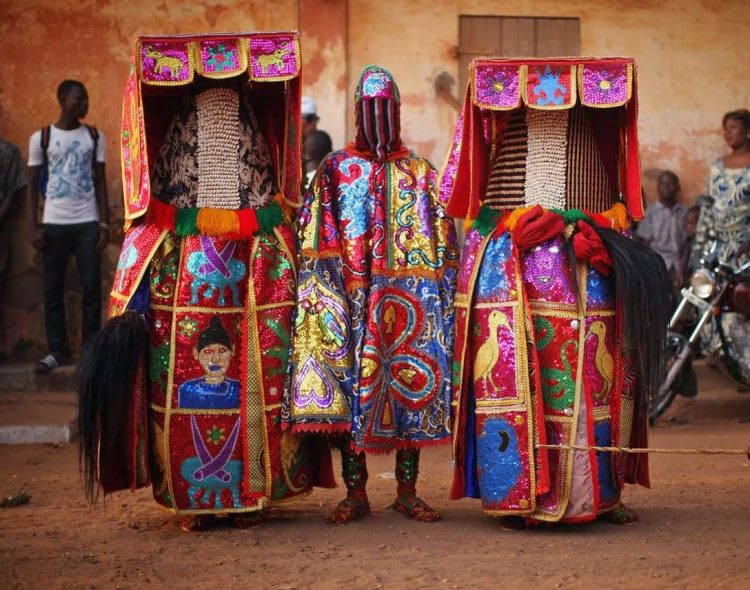
Egungun masquerade, a Yoruba tradition honouring ancestors, practised in Nigeria and Benin.
Credit: Moosmosis.
Togo.
Yoruba and related language varieties are also spoken in Togo, which borders Benin. One example is Ifè, a language closely related to Yoruba that is spoken in parts of Togo and Benin. You can even see similarities in some words, for example, the Yoruba word “wọn”, meaning “they”, appears as “nwon” in some Ifè writing, while “isu”, meaning “yam”, appears as “itsu”. These examples show how languages can have similar words while still differing in pronunciation and spelling.
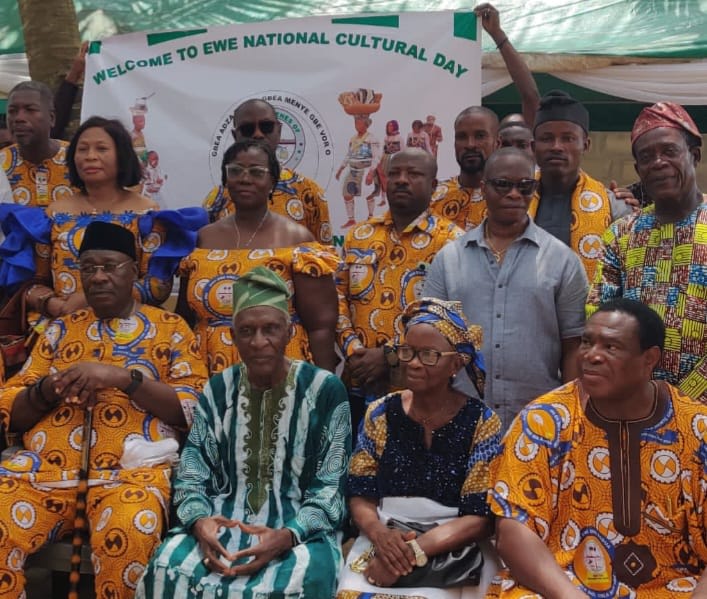
Ifè is a language related to Yoruba, spoken in parts of Togo and Benin.
Credit: Premium Times.
Ghana and Côte d’Ivoire.
Yoruba-speaking communities can also be found in Ghana and Côte d’Ivoire, partly because of migration, trade and movement between West African countries. Yoruba isn’t one of the main national languages in either country, but people of Yoruba descent still live there and keep connections to their language and family histories.
Sierra Leone.
Yoruba’s story also gets to Sierra Leone, where the Aku community grew from Yoruba people who were resettled there in the nineteenth century after being liberated from slavery. Over time, the community developed its own identity while keeping important links to Yoruba language and traditions.
Beyond Africa.
Yoruba’s journey didn’t stop in West Africa. Due to the transatlantic slave trade, enslaved Yoruba people were taken to parts of the Caribbean and South America, including Brazil and Cuba. Although Yoruba isn’t widely spoken as an everyday language in these countries, some Yoruba words and practices are practiced in some communities.
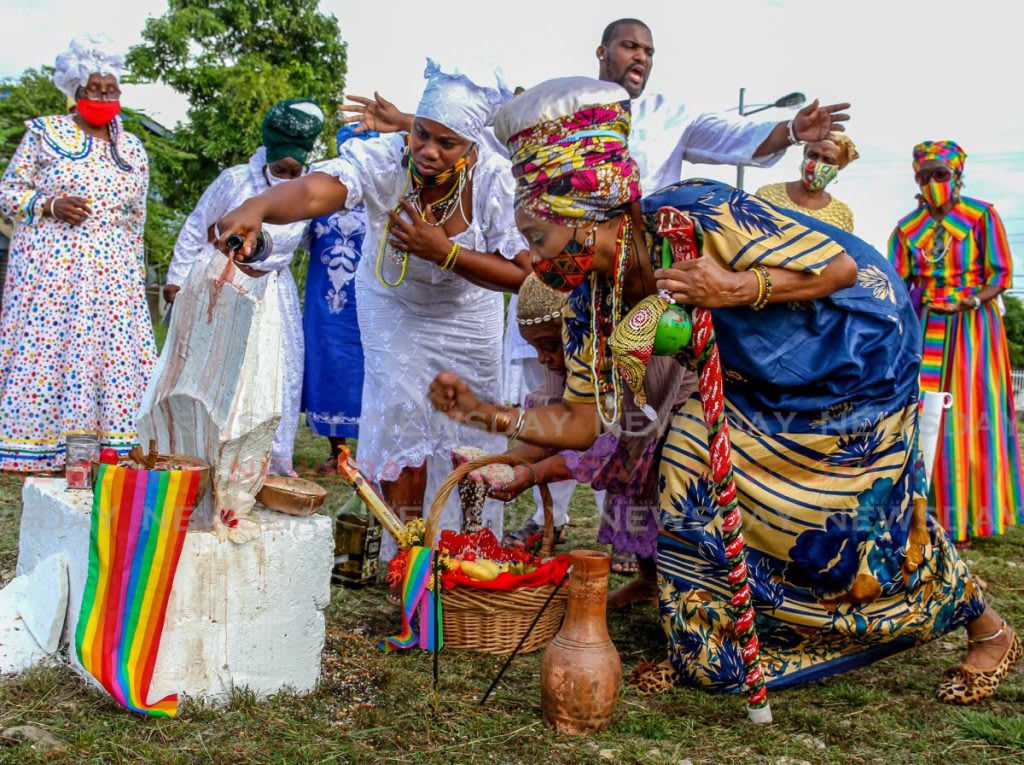
Yoruba religious traditions and practices have survived in parts of Brazil and Cuba.
Credit: Oriire.
Although Yoruba is spoken most widely in Nigeria, it is also spoken by communities in other countries, and while the number of speakers varies from one country to another, Yoruba remains part of the lives of many people outside Nigeria.
2026 Bernice Temitayo Olusaiye | Talkafricang.com

Comments (0)
Leave a Comment