
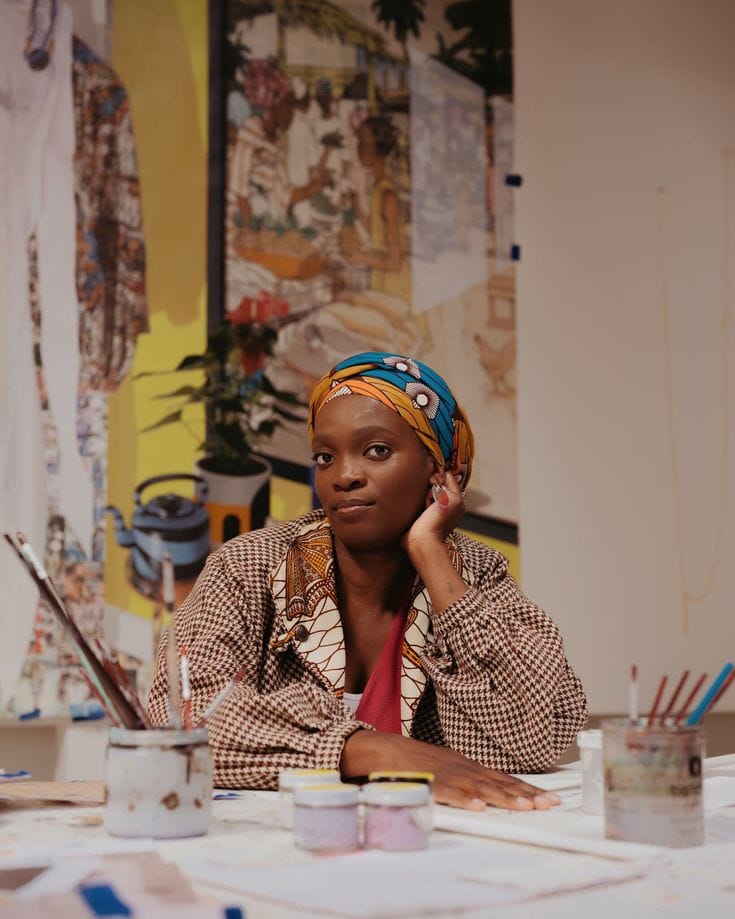
Some artists paint what they see. Njideka Akunyili Crosby paints what she carries. Born in Enugu in 1983 and raised partly in Lagos, she left Nigeria at sixteen to continue her education in the United States, a move that would eventually shape one of the most distinctive visual languages in contemporary art.
Her path to painting wasn't a straight line. At Swarthmore College, she pursued biology alongside studio art, edging closer to a career in medicine before realizing, in her final year, that art classes pulled at her more than organic chemistry ever did. That pull led her to the Pennsylvania Academy of the Fine Arts, and later to Yale, where she earned her MFA in 2011. A residency at the Studio Museum in Harlem followed soon after, placing her among a generation of African artists reshaping how the continent's stories get told on canvas.
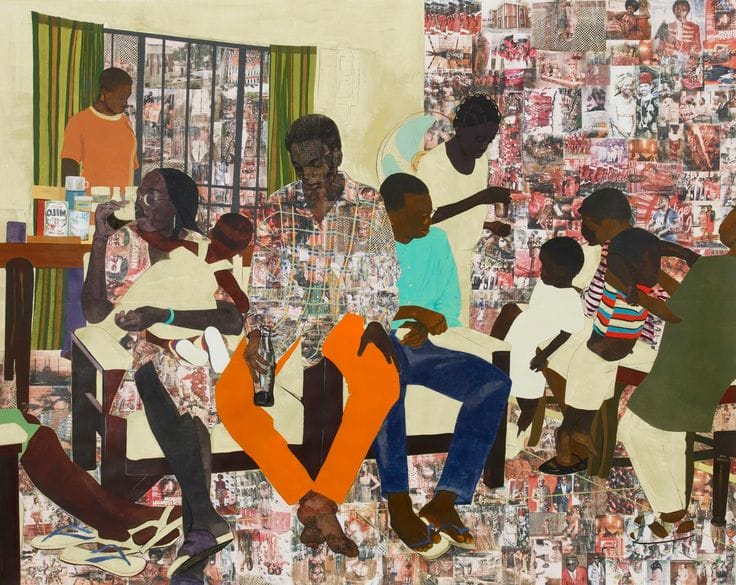
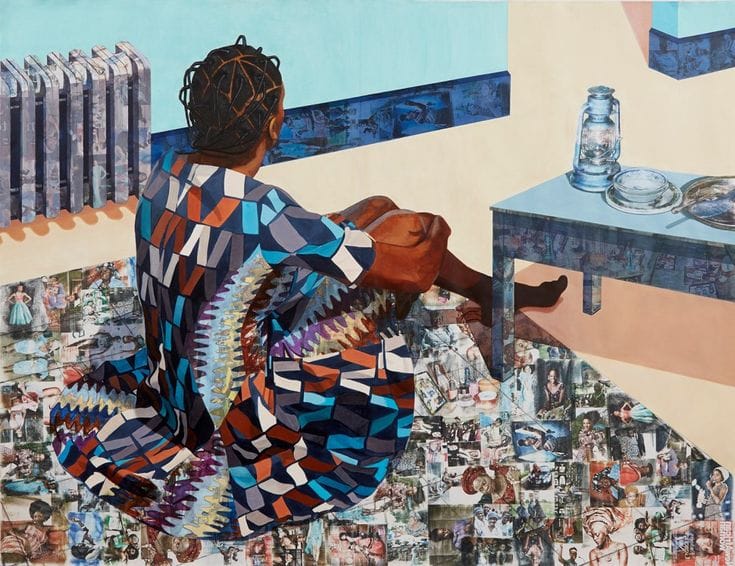
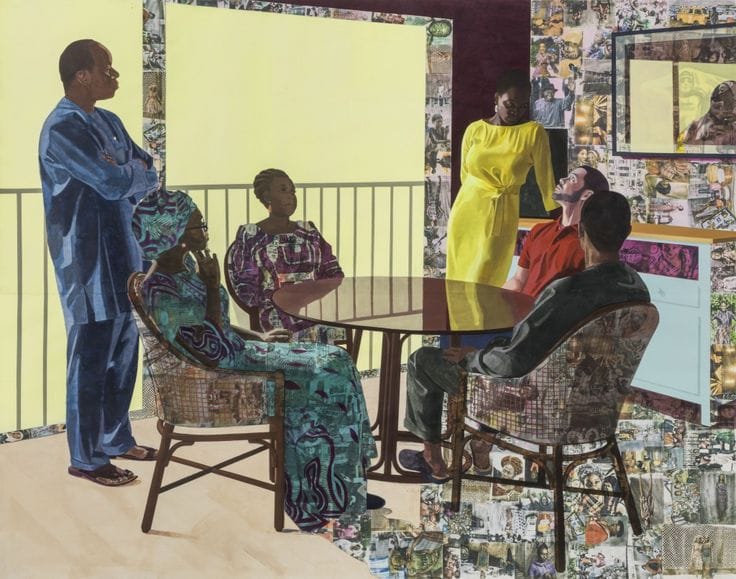
What sets her work apart is the way she builds it. Her large-scale paintings layer paint, marble dust, pencil, fabric, and photographic transfer into a single composition, often drawing images from family photographs, Nigerian magazines, and commemorative cloth. The result is dense with memory: rice bowls, kerosene lamps, patterned fabric,
and everyday Nigerian domestic life woven directly into scenes of her life in America. Her figures are often shown from behind, absorbed in eating, watching television, or simply existing together, an intimacy that invites the viewer in without asking them to look anyone in the eye.
Her work speaks directly to what it means to hold two homes at once. Nigeria never left her paintings, even as Los Angeles became her base. That tension between where she's from and where she's built her life gives her art its pulse, and it is precisely why the art world took notice. In 2017, she received the MacArthur Fellowship, often called the Genius Grant, in recognition of that vision. That same year, her painting "The Beautyful Ones," a portrait of her older sister as a girl, sold at Christie's for 3.1 million dollars, a record-breaking figure for her work at the time. Her paintings now hang in institutions including the Whitney Museum of American Art, the Baltimore Museum of Art, and the Hammer Museum, and in 2018 she became only the second artist commissioned to wrap the exterior of MOCA Grand in Los Angeles with a mural of her own design.
There is an Igbo saying that a child who washes their hands well earns the right to eat with elders. Njideka Akunyili Crosby did more than earn her seat. She brought Enugu, Lagos, and everything in between with her, and made room for all of it at the table.
© 2026 Okon David Ekanem | TalkAfricang.com


Comments (0)
Leave a Comment