From Waste To Wonder: The 24-Foot Godzilla Built From Recycled Tires In Nigeria

From Waste To Wonder: The 24-Foot Godzilla Built From Recycled Tires In Nigeria

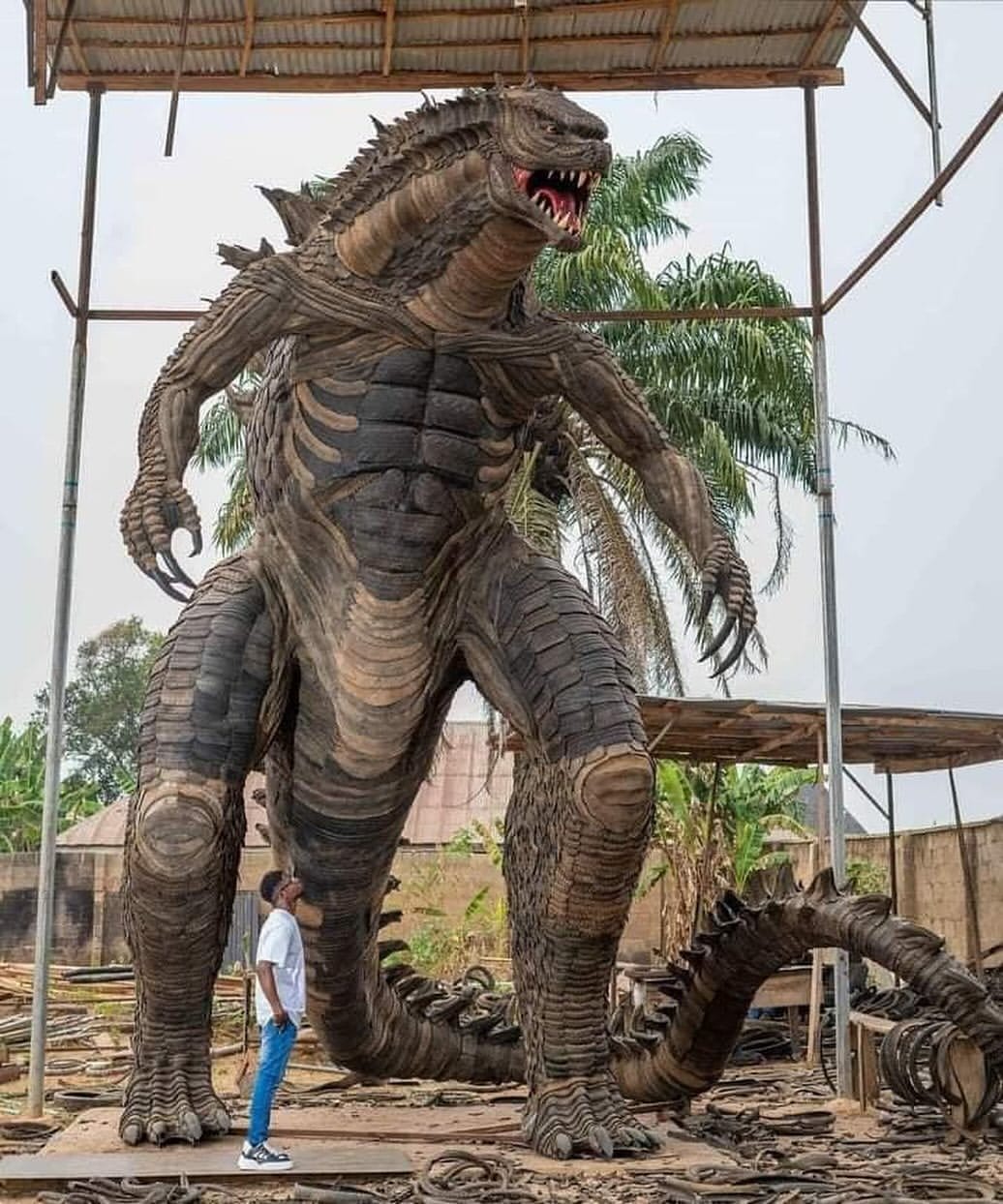
Nigeria's biggest sculpture isn't made from bronze, stone, or steel. It's made from tires that were once headed for a landfill. Sculptor Toyeeb Ajayi, a graduate of Auchi Polytechnic, spent months turning more than 3,000 pieces of discarded rubber into a 24-foot Godzilla that now stands as one of the most striking pieces of environmental art to come out of the country.

The scale alone stops people in their tracks.
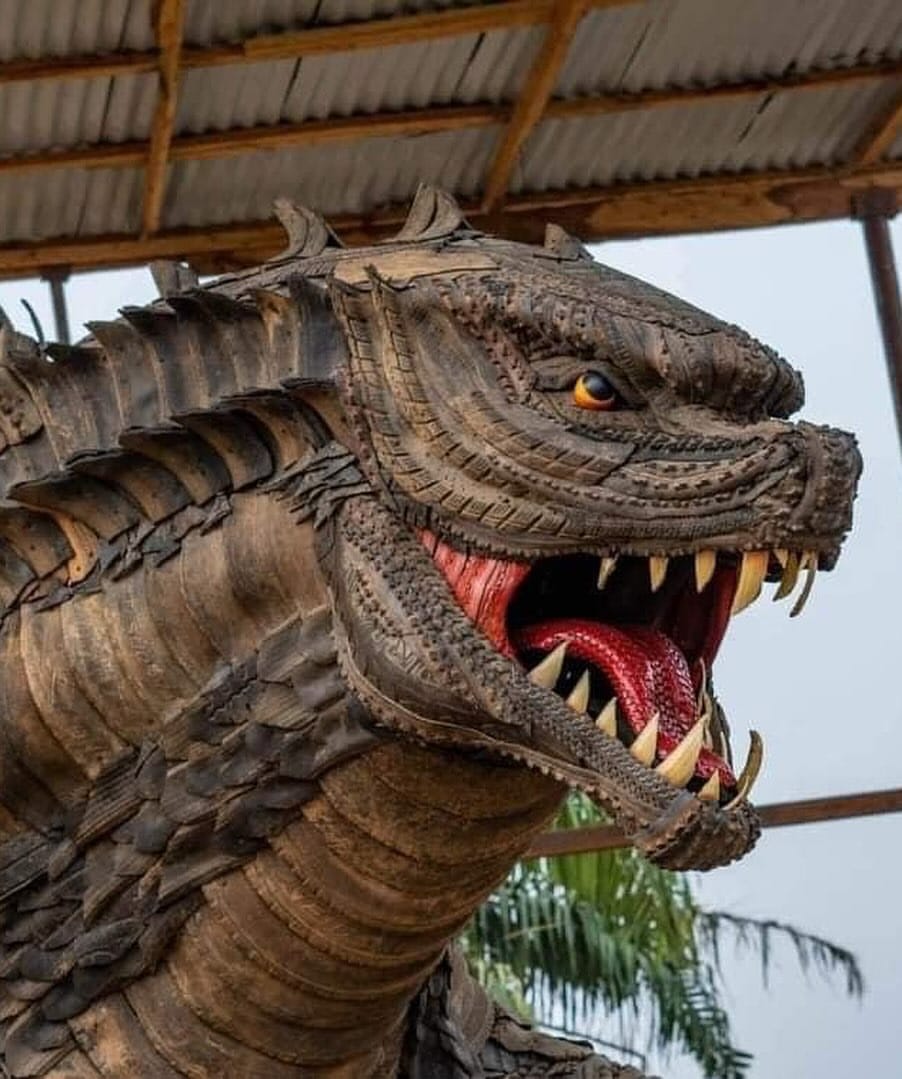
Standing two stories tall, the sculpture recreates every ridge, scale, and muscle of the monster using nothing but layered tire rubber, shaped and fitted piece by piece until the material stopped looking like waste and started looking like skin. It wasn't Ajayi's first time working at this scale either. In 2022, during an art residency in India, he built an 18-foot gorilla from the same recycled material, a project that helped sharpen the technique he would later bring home to build something even bigger.
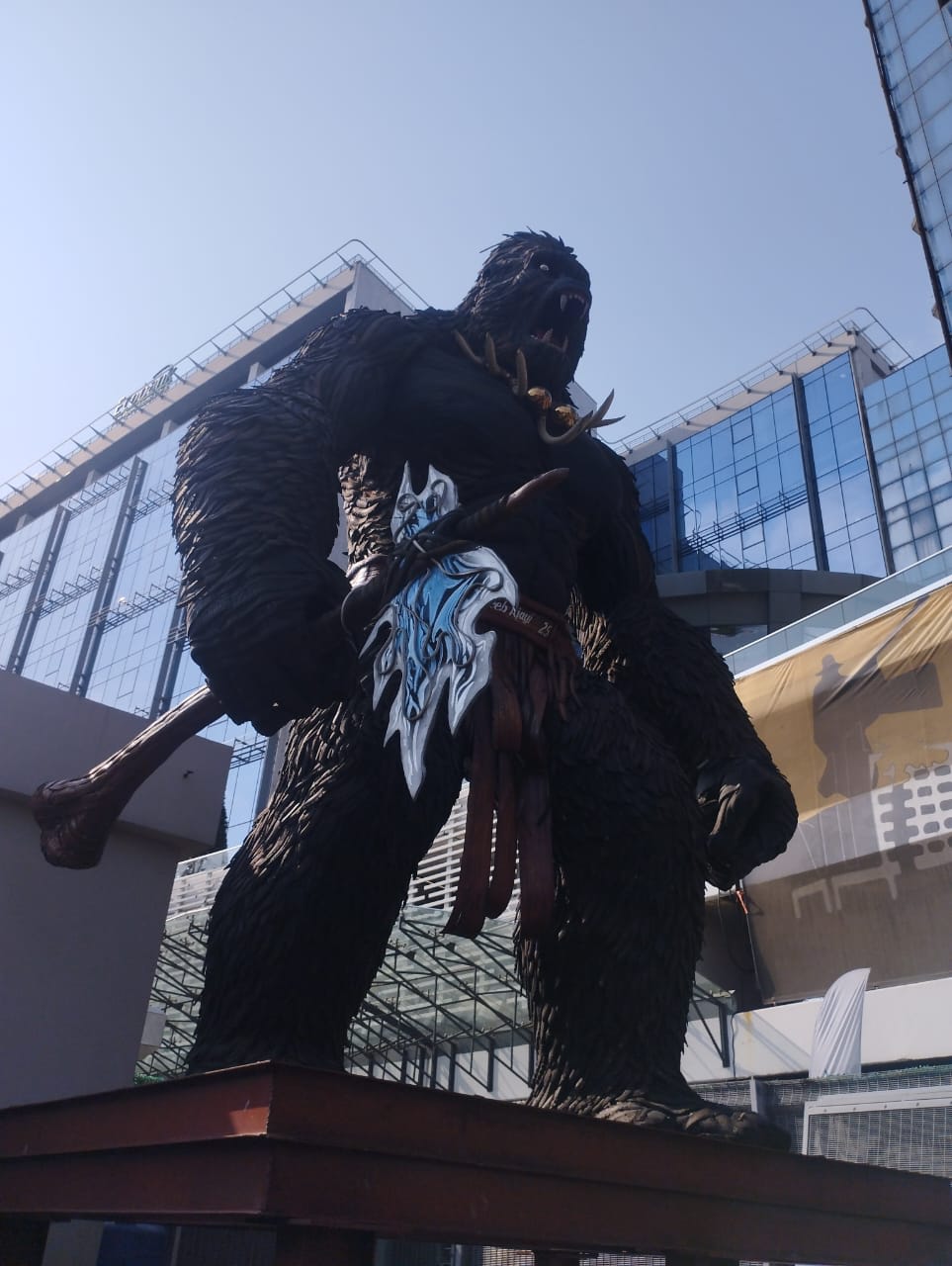
The choice of subject wasn't random. Ajayi has spoken about wanting to draw attention to Nigeria's waste management problem, and there is something fitting about using an icon of destruction to make a point about what gets thrown away. Millions of tires end up discarded across Nigerian cities every year, most of them destined to sit for decades without breaking down. Ajayi took that same material and gave it a second life as something people travel to see.

The Godzilla and Kong sculpture now stands at the Scrap Art Museum, where it has become one of the most photographed pieces in the collection. It's a reminder that raw material has less to do with what something is worth and everything to do with the hands shaping it. Ajayi took what the city no longer wanted and turned it into a landmark. There's a Yoruba proverb that says the hand of a skilled craftsman never remains empty, and looking at that towering figure of rubber and imagination, it's hard to argue otherwise.

© 2026 Okon David Ekanem | TalkAfricang.com

Filed under: arts

Share this article

Keep Reading

More stories you might find interesting

The Ndebele of South Africa: Where Walls are turned to Art and Culture Speaks in Color
arts

The Ndebele of South Africa: Where Walls are turned to Art and Culture Speaks in Color

We move out everyday, we see houses, buildings and all but unlike the usual buildings, houses are turned into canvases, languages, family stories and declaration of identities . Among the Ndebele people of South Africa, walls can do all of these things. With bold geometric patterns, beautiful colors, beadwork and unique traditional clothing, the Ndebele have developed one of the most recognizable visual cultures in Southern Africa

SIGNS OF SILENCE: How One Film Africa and Chocolate Dreams Studio Are Using Cinema to Start Conversations About Mental Health
arts

SIGNS OF SILENCE: How One Film Africa and Chocolate Dreams Studio Are Using Cinema to Start Conversations About Mental Health

The 90-day campaign is currently rolling out its pre-campaign and advocacy materials across digital platforms, with films, expert conversations, educational content and community activities forming part of the campaign experience. Because sometimes, the person who needs to hear the conversation is not the person we think it is. Sometimes, it is us. Signs of Silence. Breaking the Barrier of Silence Through Cinema. Audiences are invited to follow the campaign, engage with its content and participate in the physical and online conversations.

Njideka Akunyili Crosby: Painting Two Worlds Into One.
arts

Njideka Akunyili Crosby: Painting Two Worlds Into One.

Some artists paint what they see. Njideka Akunyili Crosby paints what she carries. Born in Enugu in 1983 and raised partly in Lagos, she left Nigeria at sixteen to continue her education in the United States, a move that would eventually shape one of the most distinctive visual languages in contemporary art. Her path to painting wasn't a straight line. At Swarthmore College, she pursued biology alongside studio art, edging closer to a career in medicine before realizing, in her final year, that art classes pulled at her more than organic chemistry ever did. That pull led her to the Pennsylvania Academy of the Fine Arts, and later to Yale, where she earned her MFA in 2011. A residency at the Studio Museum in Harlem followed soon after, placing her among a generation of African artists reshaping how the continent's stories get told on canvas.

Comments (0)

Leave a Comment

0/1000
Loading comments...