
In the quiet wetlands of the Western Region of Ghana, there exists a village that refuses to bow to land. Nzulezu Stilt Village is not built on soil, but on water. Suspended on stilts above Lake Tadane, this community stands as a living testimony to human resilience, tradition, and the will to belong.
Nzulezu, meaning “surface of water” in the local Nzema language, is believed to have been founded by migrants who journeyed from ancient regions said to be near Mali.
According to oral tradition, they were guided by a sacred snail, a symbol of patience and divine direction. When they arrived at this watery terrain, they did not retreat. Instead, they adapted. They built their homes above the lake, creating a village where canoes replace roads and water becomes both pathway and protector.
The history of Nzulezu is not written in ink but preserved in voices, rituals, and daily life. Every wooden plank beneath the homes carries memory. The village structure includes houses, a school, a church, and even communal spaces, all standing firmly above water. Life here flows with rhythm. Children paddle to school. Fishermen cast their nets at dawn. Elders sit on wooden porches, watching the ripples tell stories.
Culturally, Nzulezu is sacred ground. The people hold deep respect for the lake, believing it to be spiritually significant. There are days when fishing is forbidden, not by law, but by tradition. These practices are not superstition; they are discipline, inherited wisdom, a covenant between man and nature. It is this harmony that has preserved the village for centuries.
Recognition came when Nzulezu was inscribed on the UNESCO World Heritage Tentative List, marking it as a site of global cultural importance. But beyond global attention, Nzulezu remains intimate. It is not a museum. It is alive. Breathing. Enduring.
To reach Nzulezu, one must journey by canoe through narrow water channels lined with thick vegetation. It is not convenient. It is not rushed. And that is the point. Nzulezu teaches patience in a world addicted to speed. It reminds you that not all progress is loud.
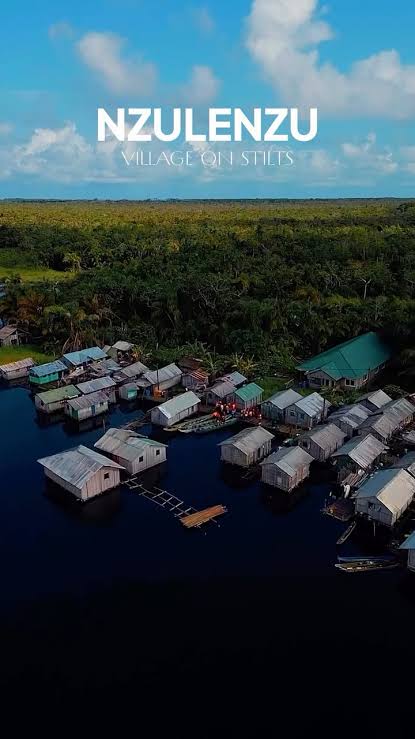 Here, water is not an obstacle. It is identity.
And as the sun sets over the still lake, painting gold across wooden homes that refuse to sink, Nzulezu whispers a truth too many have forgotten:
That survival is not always about moving forward.
Sometimes, it is about standing still,
Rooted not in land,
But in legacy.
© 2026 Ikeun Divine Michael | TalkAfricang.com



Comments (0)
Leave a Comment