
Aksum was a powerful ancient kingdom in East Africa (now northern Ethiopia and Eritrea) that existed from around the 1st to 10th century. It was a big trade hub connecting the Mediterranean, Arabia, and the Indian Ocean. They left behind impressive buildings, introduced Christianity, and created a unique writing system still used in Ethiopia.
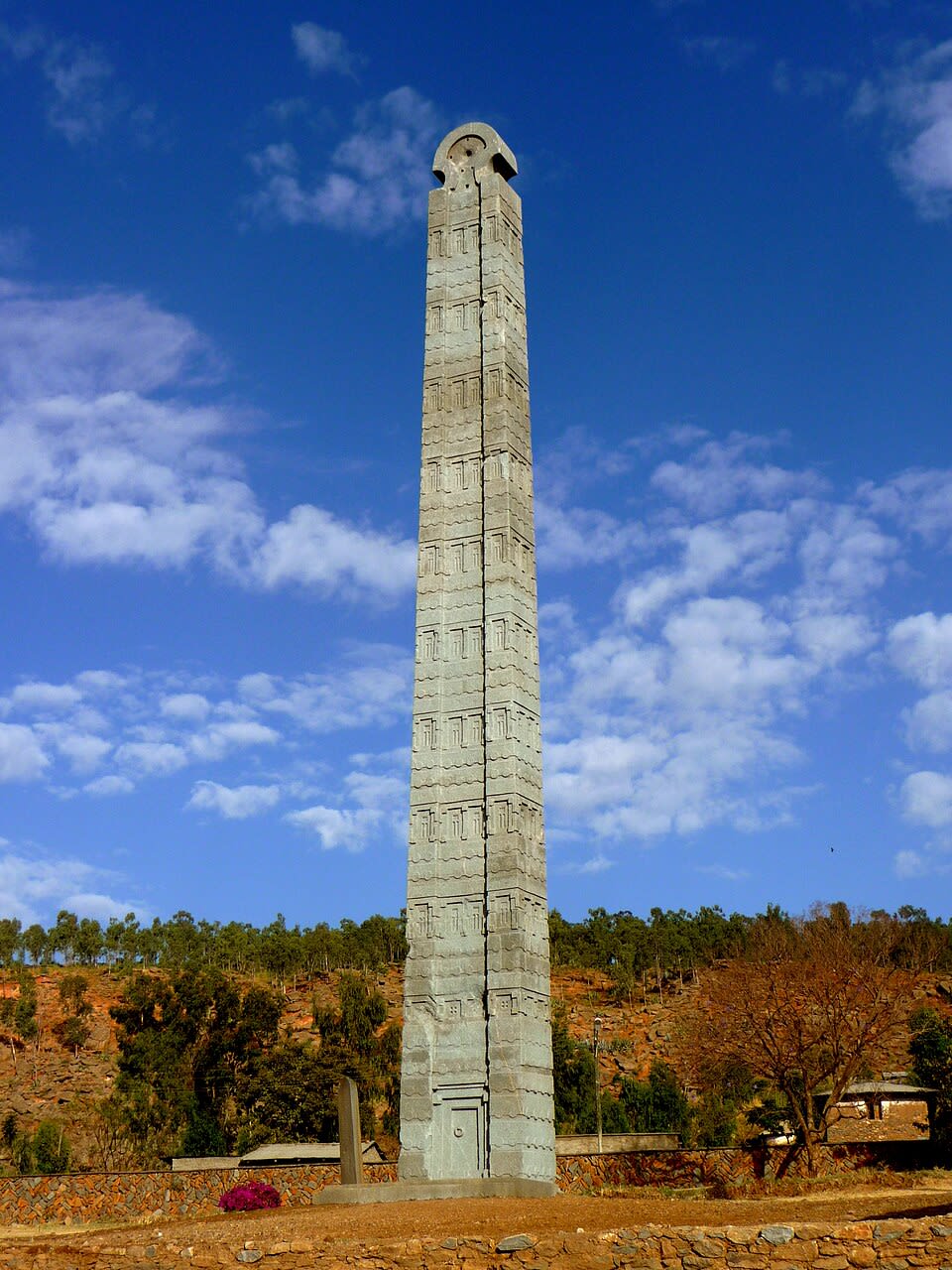
The famous Aksum obelisks, big stone pillars built to honor kings and mark royal tombs.
Photo Credit: Wikipedia
Aksum started as local farming communities and grew into a strong kingdom by 100 CE (Common Era). Its capital, Aksum, was inland, and its port Adulis was on the Red Sea, making it an important player in international trade.
Aksum became rich by trading valuable goods like gold, ivory, incense, animals, and even slaves with countries like Egypt, the Mediterranean, and India. They were like the main shop for African goods to the Roman Empire. They were so big in the trade game that they started making their own coins (gold, silver, and bronze) that people used in the region.
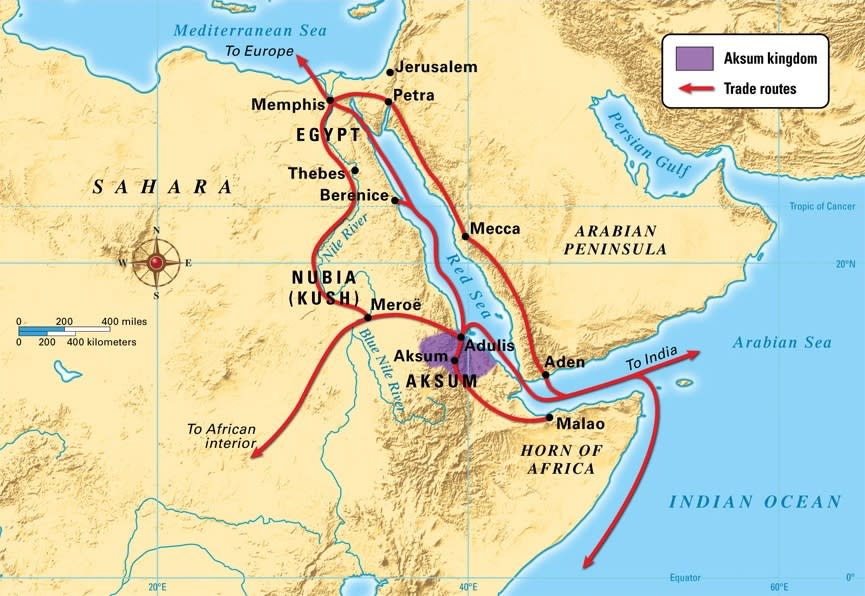
Aksum’s trade network connected Africa to the Mediterranean, Arabia, and India through the Red Sea.
Photo Credit: Kwasi Konadu
At the time, Aksum also controlled a lot of land; parts of Eritrea, northern Ethiopia, Sudan, western Yemen, and southern Saudi Arabia. They even took over the Kingdom of Kush in the 4th century. Later, King Kaleb sent troops to Yemen, beat a Jewish king, and made the region a Christian area.
Aksum created Ge'ez, a special writing system that's still used in Ethiopian churches today. Under King Ezana (340-360 CE), they became one of the first countries to adopt Christianity, which shaped Ethiopia's Orthodox tradition.
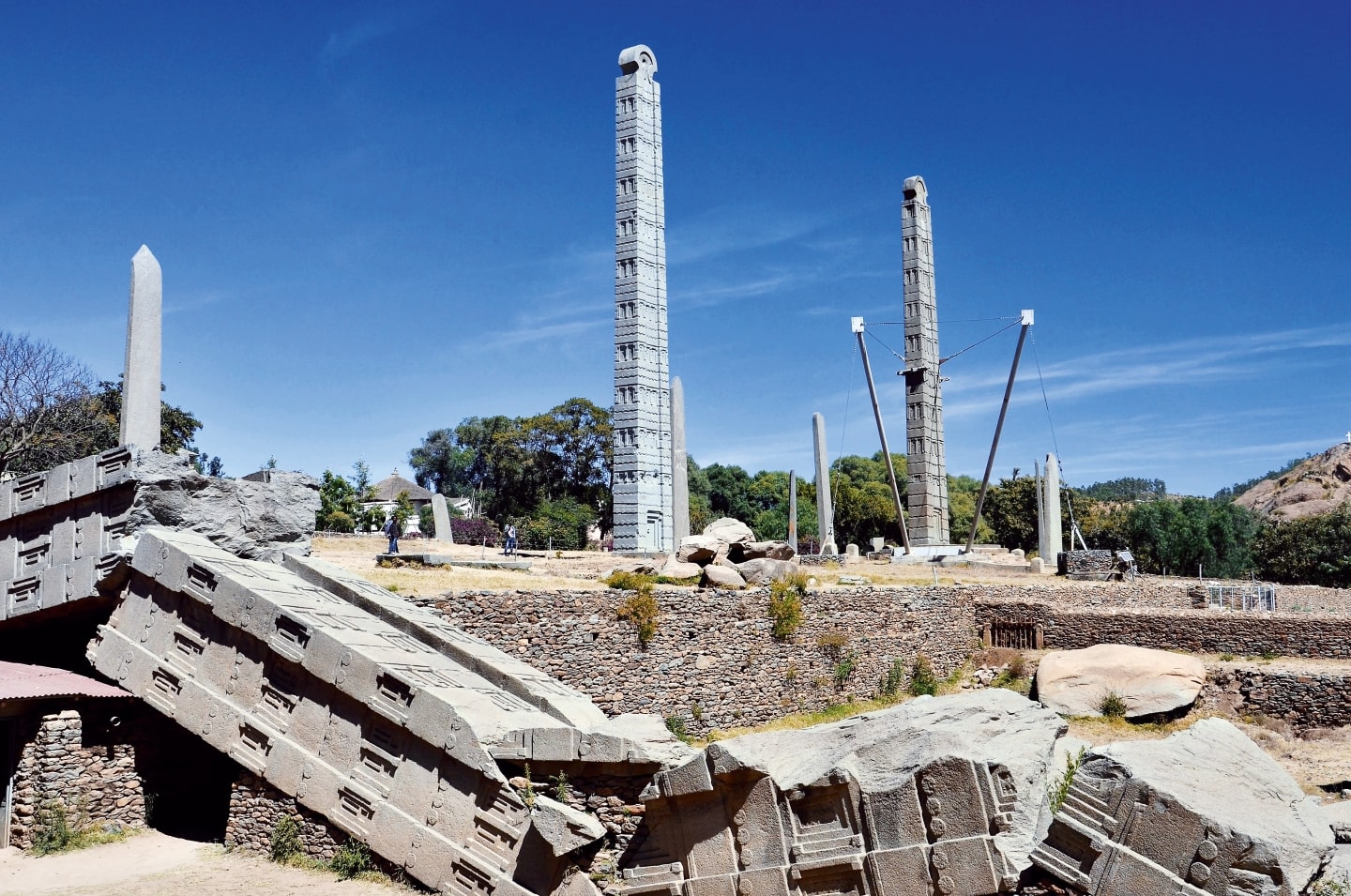
Ruins of ancient Aksum, a once powerful African kingdom.
Photo Credit: Lee Yu Kit
They built giant stone pillars (like the Obelisk of Aksum) for kings' tombs and were skilled at building cities, managing water, and farming, but when Arab traders expanded in the 7th-9th centuries, Aksum's Mediterranean trade was disrupted, which led to a decline in the economy.
2026 Bernice Temitayo Olusaiye | Talkafricang.com


Comments (0)
Leave a Comment