
High on the rugged hills of Adamawa State lies a place that refuses to fade into silence. The Sukur Cultural Landscape is not just a location, it is a living memory carved into stone, a testimony of a people who mastered their environment long before the modern world arrived.
Recognized by UNESCO as a World Heritage Site in 1999, Sukur stands as the first cultural landscape in Nigeria to receive such honor. That recognition is not accidental. It is earned through centuries of ingenuity, resilience, and deep spiritual connection to the land.
The history of Sukur stretches far beyond written records. The people of this landscape built their lives on the slopes of the Mandara Mountains, shaping stone terraces that climb the hills like a staircase to the sky. These terraces were not decoration. They were survival. They allowed farming on steep terrain, turning harsh land into fertile ground.
At the heart of Sukur lies a structured political and spiritual system centered around the Hidi, the traditional king. His palace, built with carefully arranged stones, stands as both a seat of authority and a sacred space. Leadership here was never just about power. It was about balance, between people, land, and the unseen forces believed to guide them.
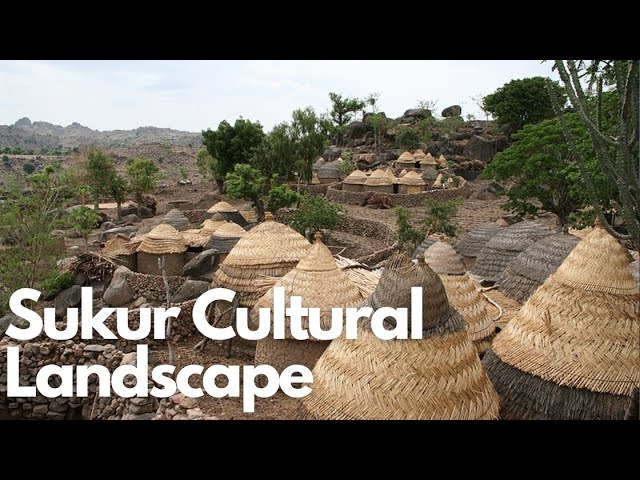
One of the most striking features of Sukur is its intricate network of paved walkways. These stone paths connect homes, farmlands, and sacred sites, forming a community that is both physically and symbolically united. Walking through Sukur is like tracing the footsteps of generations who lived with intention, discipline, and respect for tradition.
Iron smelting once defined the economic strength of Sukur. The community developed advanced techniques for extracting and working iron, making tools and weapons that sustained their society.
This was not primitive work. It was skilled craftsmanship passed down through time, a quiet reminder that Africa’s technological story did not begin with colonization.
Spiritually, Sukur is deeply rooted in ritual and belief. Sacred trees, shrines, and ceremonial spaces are scattered across the landscape. These are not relics. They are active symbols of a worldview where the physical and spiritual realms are intertwined. Festivals, rites, and traditions continue to bind the people to their ancestors and their identity.
But Sukur has not stood untouched. Conflict and displacement have threatened its people and heritage in recent years. Yet, like the stones that refuse to crumble, the spirit of Sukur remains. Preservation efforts continue, driven by both local communities and global recognition, ensuring that this heritage does not disappear into dust.
Sukur teaches something simple but powerful. Civilization is not just about skyscrapers and speed. It is about harmony. It is about knowing how to live with the land, not against it.
And in the quiet strength of those ancient stones, Sukur whispers a truth many have forgotten:
that greatness is not always loud. Sometimes, it is carved patiently into the earth, waiting for those wise enough to listen.
© 2026 Ikeun Divine Michael | TalkAfricang.com



Comments (0)
Leave a Comment