
As inflation bites across the continent, an informal, recession-proof machine roars to life every weekend in Nigeria’s bustling cities, fuelling an army of small businesses, artisans, and youth.
By Oluwafemi Soyoye
By 9:00 AM on any given Saturday in Lagos, Ibadan, or Port Harcourt, an unmistakable weekend ritual begins. Industrial iron canopy poles clang against asphalt, firewood smoke curls into the morning sky from oversized cast-iron cauldrons, and heavy sacks of ice cubes tumble into colourful drum coolers. Across town in private dressing rooms, ring lights switch on, curling irons warm up, and makeup artists begin the delicate work of pleating multi-layered Gele head-ties into towering works of art.
To an outside observer, the Nigerian Owambe looks like pure, unrestrained merrymaking, a sensory whirlwind of live percussion, hills of steaming party jollof rice, and crisp banknotes fluttering through the air over joyful dance floors.
Look beneath the music, however, and you will see something far more powerful: a resilient, decentralized, multi-billion-naira economy. While macroeconomic headlines focus on monetary reforms and rising living costs, the Owambe functions as an informal weekly stimulus package running on family loyalty, status competition, and communal solidarity.
The Aso-Ebi Pipeline
Every big weekend celebration begins months ahead of the event date with a single commercial transaction: buying the Aso-Ebi (uniform family cloth).
In contemporary Nigerian party culture, Aso-Ebi is much more than festive attire. It is the unwritten ticket of admission. Wearing it tells the hosts, ushers, and guests where you sit, how fast your food arrives, and whether you walk home with customized commemorative gifts.
According to market surveys across major trade hubs like Balogun Market on Lagos Island and Gbagi Market in Ibadan, a single wedding can move anywhere between 100 to 500 packages of lace, damask, or hand-woven Aso-Oke. Textile merchants turn over millions of naira weekly as families pay between ₦40,000 and ₦250,000 per bundle.
The financial ripple does not end at the fabric market. Next comes the neighbourhood fashion designer. From structured corsetry to stone embellishments and dramatic sleeves, bespoke tailoring fees frequently match or even surpass the price of the fabric itself. Alongside them, an energetic glam squad, freelance makeup artists, gele stylists, and hairstylists moves from home to home on Saturday mornings, providing steady self-employment for thousands of creative young women.
The Unsung Weekend Workforce
While the celebrants bask in the spotlight, an organized chain of specialized small enterprises keeps every venue humming:
- The Jollof Artisans & Caterers: Renowned Nigerian food columnists and event planners emphasize that authentic smoky party jollof cannot be cooked on modern kitchen stoves. It requires seasoned event cooks working over firewood fires, assisted by food preparation workers, meat fryers, small-chops chefs, and cocktail bar setups.
- Youth in Protocol & Ushering: Student life and early careers across university campuses in southwestern Nigeria are sustained by weekend event logistics. Event coordination agencies, ushers, and security teams regularly hire undergraduates who earn daily cash wages while gaining practical customer service and crowd management experience.
- The Visual Content Creators: The race for viral reach on social media has transformed event photography into digital production. Modern wedding budgets now include dedicated social media content creators, drone operators, and rapid-turnaround video editors tasked with producing Instagram and TikTok reels before the night ends.

Party Jollof rice with fried meat. Source: Osarieme Eweka / Getty Images
The Economics of the Live Band and the Spray Floor
At the core of every memorable Owambe is the live band, whether led by a seasoned Jùjú or Fuji maestro or a contemporary Afro-fusion hype crew armed with talking drums and brass instruments.
The bandleader is not just a performer; he acts as the event's financial director. By weaving personal names, ancestral titles, and corporate successes into impromptu praise songs, the vocalist draws guests toward the dance floor.
Once there, the customary ritual of "spraying" begins. While regulatory debates persist regarding the handling of physical currency notes, this act serves as a public exchange of goodwill and status signalling. That currency circulates immediately:
- Venue cleaning crews collect dropped notes and keep the floor clear.
- The percussionists and backup vocalists receive a direct share of tips gathered on the stage.
- Neighbourhood security attendants and area hype boys stationed at the venue gates receive customary gratuities to ensure safe parking and exit corridors.
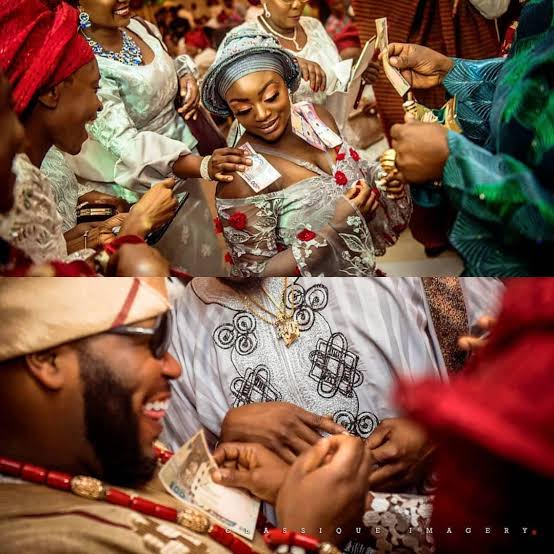
Spraying money on the dance floor. Source: Facebook
Informal Social Banking
Cultural sociologists and financial analysts frequently raise an obvious question: in an economy with steep food prices and currency fluctuations, why do families continue to host and attend these elaborate celebrations?
The explanation lies in how community capital operates across West Africa. An Owambe function as an informal, long-term mutual credit network:
- Reciprocity as Social Insurance: Buying an acquaintance's ₦50,000 Aso-Ebi and spraying their family today creates a cultural credit. When your own wedding or milestone anniversary arrives, that guest is culturally obliged to purchase your fabric, present gifts, and return the goodwill.
- Direct Wealth Retention: Unlike imported retail goods, almost every naira spent inside an Owambe remains directly inside the domestic micro-economy, moving straight into the bank accounts of seamstresses, local farmers, transport drivers, and freelance creatives.
- Business Incubation: Corporate partnerships are often agreed upon over plates of small chops, and entry-level freelancers regularly land corporate contracts by networking at family reception tables.
The Living Rhythm
By Sunday morning, the marquees are taken down, sound rigs are loaded onto flatbed lorries, and exhausted catering crews wash down their iron pots.
On Monday, corporate offices fill with spreadsheets and economic indices. But the rhythm of the city tells another story. Come the following weekend, the canopies will rise again.
The Owambe is not mere vanity. It is a resilient display of communal support, a major creator of youth employment, and proof that across Africa, cultural celebration and grassroots commerce move in perfect rhythm.


Comments (0)
Leave a Comment