
Introduction
Tetanus is a serious and potentially life-threatening infectious disease that affects the nervous system and muscles. It is caused by a bacterium known as Clostridium tetani. Although tetanus is preventable through vaccination, it remains a major public health concern in some parts of the world, especially in areas with low immunization coverage and poor hygiene practices.

Tetanus is commonly associated with dirty wounds, rusty nails, and unclean delivery practices. The disease can affect people of all ages, but newborn babies and pregnant women who are not properly vaccinated are at particularly high risk.
What Causes Tetanus?
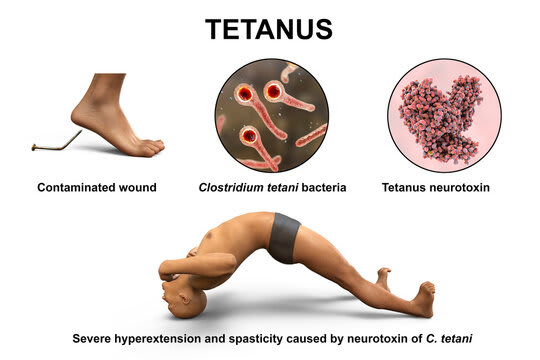
Tetanus is caused by spores produced by the bacterium Clostridium tetani. These spores are found almost everywhere in the environment, including:
✓ Soil
✓ Dust
✓ Animal and human feces
✓ Rusty tools such as nails, needles, and barbed wires
The spores are highly resistant to heat and many antiseptics, allowing them to survive for years.
When the spores enter the body through cuts, puncture wounds, burns, surgical wounds, or animal bites, they can multiply and release toxins that attack the nervous system.
One important fact about tetanus is that it is not contagious. It cannot spread from one person to another.
Types of Tetanus
- Generalized Tetanus
This is the most common form of tetanus. Symptoms usually begin in the jaw and gradually spread downward through the body.
- Localized Tetanus
In this uncommon type, muscle spasms occur near the site of the wound. Although milder, it can progress to generalized tetanus.
Neonatal Tetanus
This occurs in newborn babies, usually due to unclean delivery practices or contaminated instruments used to cut the umbilical cord.
Maternal Tetanus
This occurs during pregnancy or within six weeks after the end of pregnancy, especially in women who are not adequately vaccinated.
Incubation Period
The incubation period of tetanus is usually about 10 days, but it can range from 3 to 21 days after infection. Most cases occur within 14 days.
Generally, the shorter the incubation period, the more severe the disease may become.
Signs and Symptoms of Tetanus
Symptoms often begin gradually and become worse over time.
Early Symptoms
✓ Jaw stiffness or “lockjaw”
✓Difficulty opening the mouth
✓Painful muscle stiffness
✓Neck rigidity
✓Difficulty swallowing
✓Tight abdominal muscles
Progressive Symptoms
As the disease advances, severe muscle spasms develop. These spasms may:
✓Arch the back and neck
✓Cause rigid arms and legs
✓Clench the fists
✓Interfere with breathing
These spasms can be triggered by:
- Loud noises
- Bright lights
- Physical touch
- Sudden movement
Other Symptoms
- Fever
- Excessive sweating
- Headache
- Rapid heart rate
- High or low blood pressure
Symptoms in Newborns
Neonatal tetanus often presents with:
- Inability to suck or breastfeed
- Excessive crying
- Muscle rigidity
- Repeated spasms
Diagnosis of Tetanus
Tetanus is mainly diagnosed based on clinical signs and symptoms. Laboratory confirmation is usually not required.
Healthcare providers often look for:
- Muscle rigidity
- Painful spasms
- Lockjaw
- Difficulty swallowing
- History of wounds or injuries
However, some people may not remember any obvious injury before symptoms begin.
Complications of Tetanus
Without prompt treatment, tetanus can lead to serious complications such as:
- Breathing difficulties
- Fractures caused by severe spasms
- Pneumonia
- Damage to the nervous system
- Death
Because the disease affects breathing muscles, severe cases may require intensive care support.
Treatment of Tetanus
Tetanus is a medical emergency that requires immediate hospital care.
Treatment may include:
✓ Human Tetanus Immune Globulin (TIG)
This medicine helps neutralize toxins that have not yet attached to nerve tissue.
✓ Wound Care
Proper cleaning and removal of damaged tissue help stop bacterial growth.
✓ Antibiotics
Antibiotics may be used to kill the bacteria producing the toxins.
✓ Muscle Relaxants and Sedatives
These medications help control painful muscle spasms.
✓ Supportive Care
Patients with severe breathing difficulties may require oxygen therapy or mechanical ventilation.
✓ Vaccination
People recovering from tetanus still need vaccination because infection does not provide natural immunity.
✓ Prevention of Tetanus
The best way to prevent tetanus is through vaccination with tetanus-toxoid-containing vaccines (TTCV).
Common Tetanus Vaccines
- DTaP (Diphtheria, Tetanus, and Pertussis)
- Td (Tetanus and Diphtheria)
- Tdap (Tetanus, Diphtheria, and Pertussis)
WHO Recommended Schedule
World Health Organization recommends six doses throughout life:
- Three primary doses in infancy
- Three booster doses during childhood and adolescence
- Adults are also advised to receive booster shots periodically.
Preventing Neonatal and Maternal Tetanus
Neonatal tetanus can largely be prevented through:
✓ Vaccination of women of reproductive age
✓Clean delivery practices
✓Sterile instruments during childbirth
✓Proper umbilical cord care
Improved immunization programs worldwide have greatly reduced deaths from neonatal tetanus over the years.
Global Health Impact
According to World Health Organization, tetanus cases and deaths have significantly decreased due to vaccination campaigns and improved maternal healthcare.
In 2018, approximately 25,000 newborns died from neonatal tetanus worldwide, representing a major reduction compared to previous decades.
Despite this progress, tetanus remains a challenge in low-income regions where access to vaccines and clean healthcare practices may be limited.
Conclusion
Tetanus is a dangerous but preventable disease caused by bacterial toxins affecting the nervous system. Early recognition of symptoms such as lockjaw, muscle rigidity, and spasms is important because the disease can become life-threatening very quickly.
Vaccination remains the most effective protection against tetanus. Proper wound care, clean delivery practices, and routine immunization are essential steps in reducing the burden of this disease worldwide.
© 2026 Ukachi Rejoice| TalkAfricang.com



Comments (0)
Leave a Comment