
For centuries, the mention of pyramids has drawn the world's attention to Egypt. Towering monuments at Giza have become symbols of ancient civilization, leaving many unaware that the greatest concentration of pyramids on Earth lies not in Egypt, but in neighboring Sudan. Deep within the Nubian Desert stands Meroë, an ancient city whose silent pyramids tell the remarkable story of the Kingdom of Kush, one of Africa's greatest civilizations.
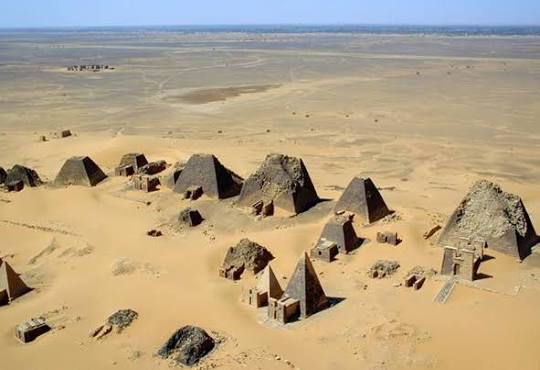
Located about 200 kilometers northeast of Khartoum, Meroë served as the capital of the Kingdom of Kush from around 300 BC to AD 350. Long before becoming a thriving royal city, the Kushite civilization had already flourished along the Nile, sharing centuries of trade, warfare, and cultural exchange with ancient Egypt. Yet the Kushites developed an identity of their own, blending African traditions with influences from the Nile Valley.
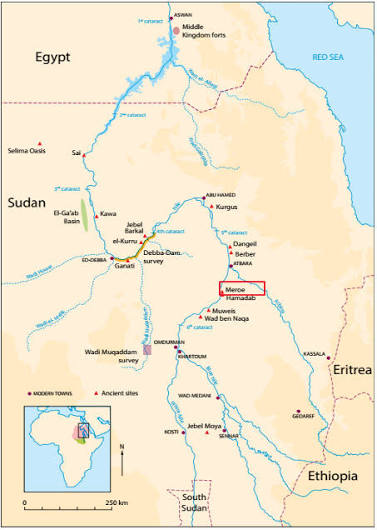
The rulers of Kush chose Meroë as the heart of their kingdom because of its fertile lands, abundant iron ore, and strategic position along major trade routes. From this city, kings and queens governed an empire that connected Central Africa with Egypt, the Red Sea, and beyond. Meroë became renowned for iron smelting, earning the nickname "the Birmingham of Ancient Africa" due to its thriving metal industry.
Today, Meroë is best known for its extraordinary royal cemeteries. More than 200 steep-sided pyramids rise from the desert sands, built as tombs for Kushite kings, queens, princes, and nobles. Though smaller than Egypt's pyramids, they possess a distinctive architectural style with narrow bases, sharp angles, and beautifully decorated chapels that celebrate the beliefs and achievements of those buried within.
The pyramids were constructed between the 3rd century BC and the 4th century AD. Inside many tombs, archaeologists discovered paintings, inscriptions, jewelry, pottery, and royal treasures that reveal the rich spiritual life and artistic excellence of the Kushite people. Despite suffering damage from treasure hunters in the 19th century, the site remains one of Africa's most breathtaking archaeological landscapes.
In 2011, UNESCO recognized the Archaeological Sites of Meroë as a World Heritage Site, acknowledging their outstanding value to human history. The pyramids continue to stand as enduring symbols of an African civilization whose achievements deserve far greater global recognition.
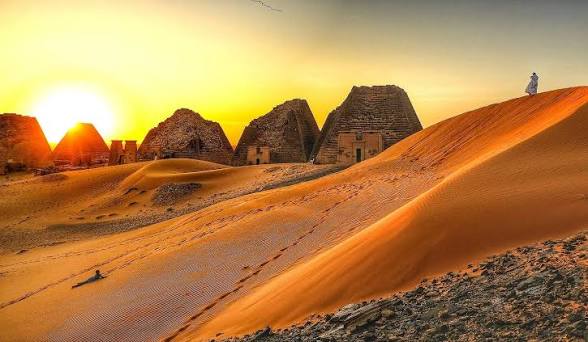
Africa's history is often told through familiar landmarks, yet Meroë reminds us that many of its greatest wonders remain hidden in plain sight. Every pyramid rising from Sudan's golden sands is a testimony that greatness is not measured by fame but by legacy. The winds may reshape the desert, but they cannot erase the story carved into these ancient stones. Meroë invites the world to look beyond the obvious and rediscover a chapter of African history that has always been waiting to be told.
Fun Fact: Most people believe Egypt has the most pyramids in the world but that's a myth. Sudan holds that record, with more than 250 pyramids, the majority of them located in and around Meroë, making it the country with the largest number of pyramids on Earth.
© 2026 Ikeun Divine Michael | TalkAfricang.com


Comments (0)
Leave a Comment