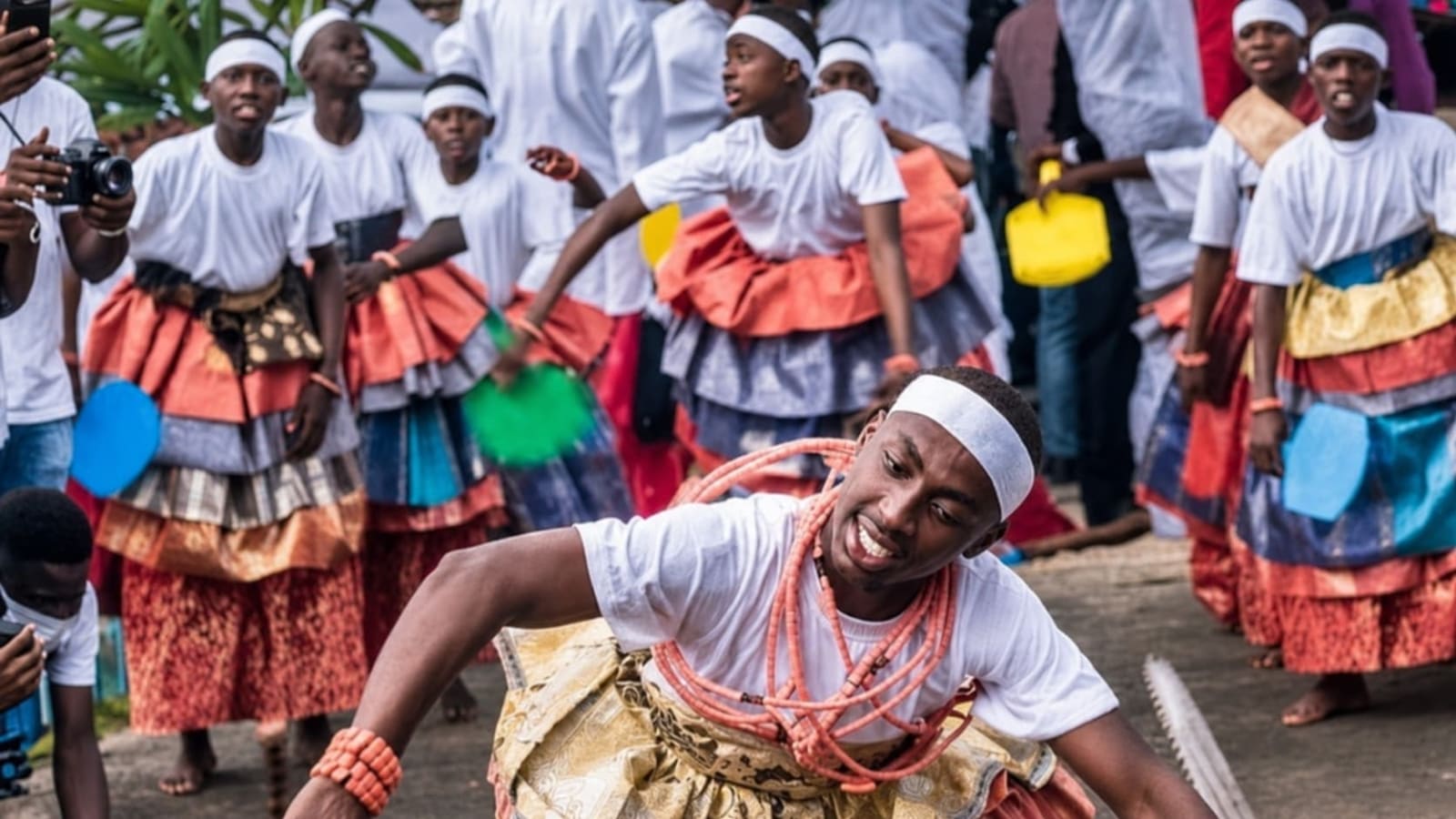
In Southern Nigeria, Delta state to be precise, we have the amazing people of Itsekiri, they are custodians of one of the country's most vibrant and regal cultural heritages. Popularly known for their rich history, deep-rooted traditions, and sense of elegance, the Itsekiri people have preserved a legacy that beautifully blends African identity with centuries of cultural exchange.
Their traditional ruler, the Olu of Warri, remains a revered symbol of unity, continuity, and cultural pride. Presently we have the Olu of Warri, His Majesty Ogiame Atuwatse III, and his wife, Queen Consort Olori Ivie Atuwatse III, who are role models to alot of young people out there.
Through generations, the Itsekiri have maintained customs that celebrate family, community, and respect for tradition while embracing the opportunities of the modern world.
The traditional attire of the Itsekiri is a graceful display of sophistication and identity. We often see Men in fine tailored wrappers, embroidered shirts, and flowing robes, complemented by walking sticks, hats, and layers of coral beads that signify honour and prestige. We see the Women elegantly dressed in beautifully wrapped George fabrics, beautiful head ties or headscarves as it is also called, luxurious lace, and dazzling coral bead necklaces, bracelets, and earrings. And as a beader and someone who is a bead literate, I can tell you that the beads worn by the amazing people of Itsekiri speaks class and calibre.
Every piece worn tells a story, reflecting status, heritage, and a profound appreciation for beauty. Coral beads hold a particularly special place in Itsekiri culture. More than just necklaces or bracelets, they are seen as symbols of royalty, dignity, and ancestral connection. These beads are worn during weddings, coronations, festivals, and other important ceremonies.
Beyond fashion, the Itsekiri are celebrated for their colourful festivals and ceremonies that breathe life into their cultural heritage. Traditional dances (which is so interesting and pleasing to the eyes), rhythmic drumbeats, melodious songs, and elaborate processions transform celebrations into unforgettable memories.
There are several Festivals carried out by then, and festivals are not merely occasions for entertainment, they are opportunities to honour ancestors, strengthen community bonds, and pass cherished traditions to younger generations.
In today's world, the younger generation of Itsekiri people continues to celebrate their heritage in creative ways. Fashion designers create beautiful traditional attire, musicians are blending local songs with modern sounds, and they end up coming out beautifully.
The Itsekiri are more than a people, they are a living expression of royalty, culture, and timeless African elegance.
©2026|Esther Ojoma Sule |Talk Africa ng.com


Comments (0)
Leave a Comment