
Elon Musk is worth close to a trillion dollars. The programme he shut down was keeping millions of Africans alive on a budget his net worth could cover for generations. That contradiction is the story.
A street market in East Africa — the kind of everyday economy USAID-funded health and food programmes operated alongside. (Photo: press archive, unverified)
Let's start with the number, because the number is the whole point: Elon Musk's net worth sits at roughly $975 billion. Not million. Billion — with a 'b' that keeps adding zeroes faster than most economies can grow. In 2025, he took a chainsaw, literally his word for it, to the United States Agency for International Development, the arm of American foreign policy that had spent decades keeping the poorest parts of the world's poorest continent alive.
USAID's African budget between 2021 and 2024 was $131 billion — spread across four years, across an entire continent. Musk's personal fortune could have covered that same commitment more than seven times over, alone, without selling a single share of Tesla or SpaceX. He didn't need to write that check. Nobody asked him to. But he did have the power, briefly, to switch off the tap on somebody else's — and he used it.
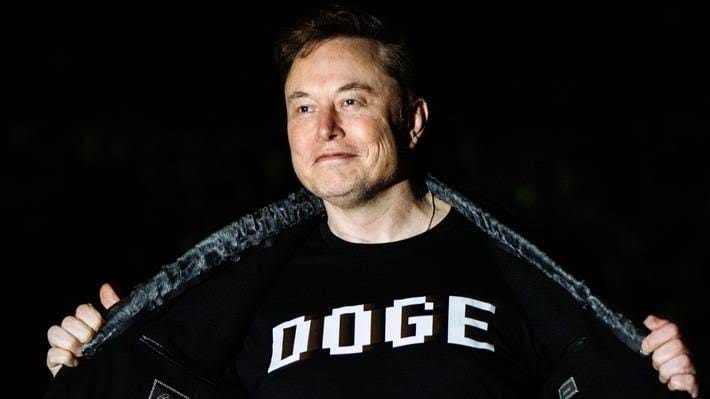
Elon Musk, then head of the Department of Government Efficiency (DOGE), which oversaw the dismantling of USAID. (Photo: press wire, unverified)
THE PEOPLE ON THE OTHER END OF THE SPREADSHEET
In Washington, this was a line item. A percentage cut. An efficiency metric. On the ground in Africa, it was a woman in Turkana carrying a sack of USAID-marked grain on her head because the rains failed again. It was a child in a displacement camp holding a tin of USAID vegetable oil like it was the only certain meal of the week. It was a mother in Gaza province, Mozambique — one of the highest HIV-prevalence regions on the planet — watching a clinic that depended on American funding go quiet almost overnight.
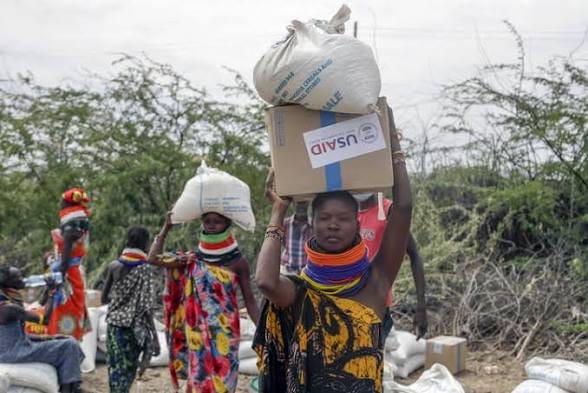
A woman carries USAID-marked food aid in northern Kenya. Photo distribution of this kind has slowed sharply since 2025. (Photo: press archive, unverified)
A girl stands beside a USAID vegetable oil container at a displacement camp in the Horn of Africa. (Photo: press archive, unverified)
None of this is abstract. Boston University's Global Impact Counter, before it stopped tracking in February 2026, put the global toll at roughly 780,000 to 800,000 preventable deaths in the first year alone — nearly two-thirds of them children. The Lancet's modelling puts the five-year toll, if funding isn't restored, at up to 14 million lives. In Zimbabwe alone, malaria deaths jumped 218 percent in four months. These are not projections from people who dislike Musk. These are epidemiologists doing the grim arithmetic of what happens when medicine, clean water, and food aid disappear from places that had built their survival around them.
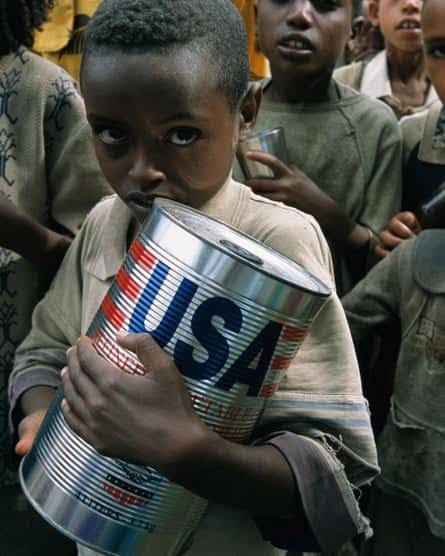
A child holds a USAID grain container — an image that has become emblematic of decades of American food assistance to famine-affected communities in the Horn of Africa. (Photo: press archive, unverified)
THE DEFENCE, TO BE FAIR
Musk's answer to all of this has been consistent: he says the numbers are unproven, that no one can name a person who died, that private philanthropists like Bill Gates or MacKenzie Scott could step in if lives were genuinely at risk, and that decades of aid had built dependency rather than resilience. That last argument isn't only a billionaire's talking point — African policy voices, including former Liberian official W. Gyude Moore, have separately argued that the continent's own leaders share responsibility for never building the domestic systems that would have made USAID's exit survivable rather than catastrophic. That's a legitimate structural critique, and it deserves to be part of this conversation rather than dismissed as cover.
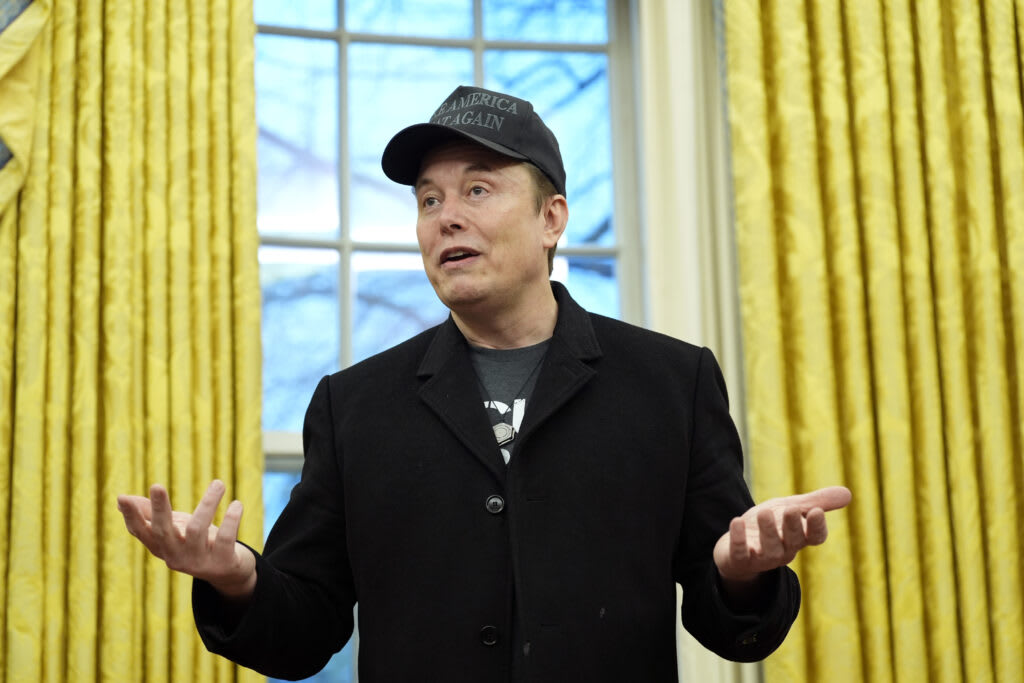
Elon Musk at the White House. His net worth has continued to grow even as the agency he dismantled left significant funding gaps across Africa. (Photo: press wire, unverified)
But structural critique of Africa's aid dependency and a wealthy individual's decision to end that support overnight, with no transition plan, are two different conversations, and collapsing them into one lets the second question go unasked. Whatever you believe about the long-term wisdom of foreign aid, the manner of this exit — 83 percent of programmes cancelled, a fifty-country disease surveillance network switched off, clinics closed within days because staff couldn't be paid — was not a policy decision made with Africa's transition in mind. It was a demolition.
THE PART THAT SHOULD SIT UNCOMFORTABLY
Here is the irony, stated plainly: the man with the resources to personally absorb the entire cost of what he cut, several times over, chose instead to cut it — and has spent the year since arguing that doing so cost nobody anything. Whether you find his dependency argument persuasive or not, that particular claim, that zero people died, sits very uneasily next to a woman in Turkana carrying her own food aid on her head, a girl in a Somali camp standing next to a container marked 'not to be sold or exchanged,' and a mortality tracker that ran for a year before its own funders had to shut it down.
Africa does not need saviours, and it certainly doesn't need its survival treated as one man's rounding error. What it needs, and what this moment has made painfully visible, is systems that don't collapse the instant a single donor changes his mind. That conversation is bigger than Elon Musk. But it started, in its current and most brutal form, with him.
© 2026 Abdulmumin Ishola Olaleye | TalkAfricang.com


Comments (0)
Leave a Comment