
Before jewelry became a fashion accessory, it was a language. Among the Amazigh communities of North Africa, jewelry has long been used to express identity, beauty, heritage, status, and tradition.
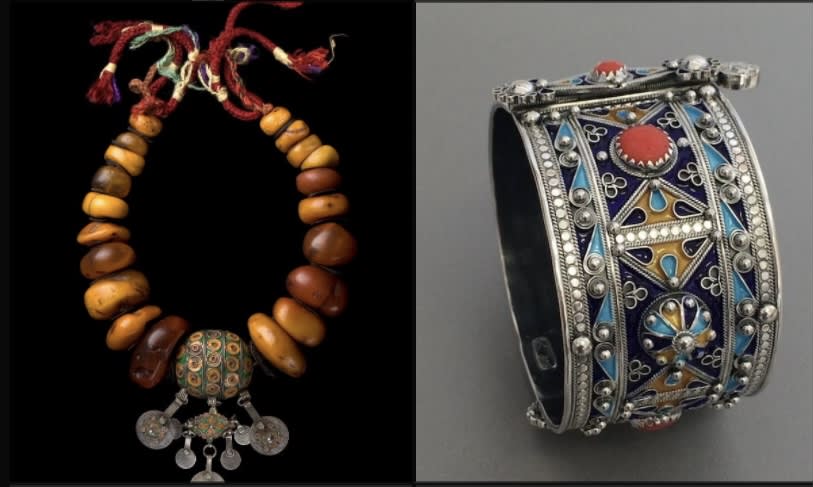
Often referred to as Berber jewelry, Amazigh jewelry is particularly known for its striking use of silver. Large necklaces, earrings, bracelets, rings, pendants, and decorative brooches can be seen in traditional dress, with each piece carrying its own character and history.
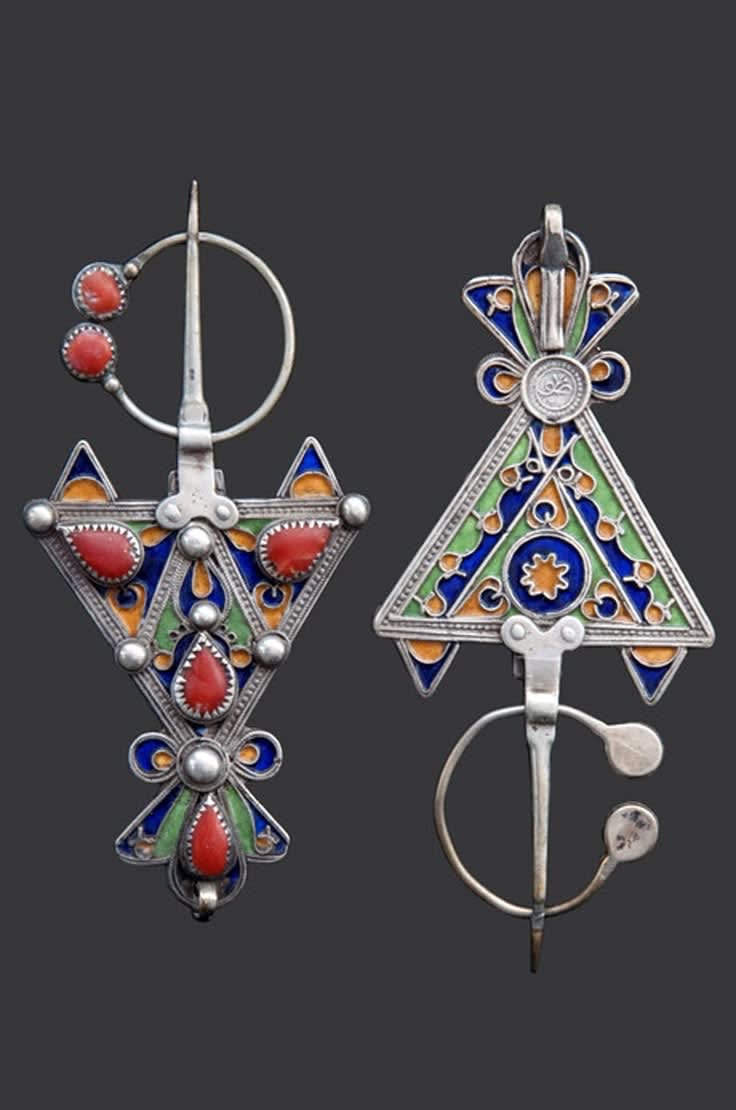
One of the most fascinating pieces is the fibula, a large decorative brooch traditionally used to hold clothing together. What began as something practical became an important part of Amazigh adornment, often decorated with geometric patterns and other details that make it as beautiful as it is functional.
The beauty of Amazigh jewelry is also in its boldness. Unlike delicate pieces designed to disappear into an outfit, many traditional pieces are made to be noticed. Oversized earrings, layered necklaces, heavy bracelets and elaborate pendants can completely transform a simple outfit.
But the jewelry is not simply about looking beautiful. For generations, these pieces have been connected to cultural identity and social life. Jewelry could reflect a woman’s region, family background, marital status or social standing. Some designs and symbols also carry spiritual or protective associations, although their meanings can vary between Amazigh communities.
The craftsmanship makes the jewelry even more remarkable. Artisans work with silver and may incorporate materials such as coral, amber, enamel, glass and coins. Engraved geometric patterns give many pieces their distinctive appearance, turning jewelry into wearable pieces of art.
Today, Amazigh jewelry continues to find its place beyond traditional clothing. Its bold silver designs can be paired with a simple dress, a flowing kaftan, linen separates or even a modern blazer. A statement necklace or pair of earrings can take an otherwise simple outfit from ordinary to unforgettable.
This is where tradition meets contemporary fashion. What was once worn primarily within cultural settings can now inspire modern accessories and styling while still carrying the visual language of Amazigh craftsmanship.
Perhaps that is what makes Amazigh jewelry so captivating. It does not simply decorate the body; it carries pieces of history with it.
Every engraving, shape and carefully crafted piece reminds us that African fashion has never been only about clothing. Sometimes, culture is carried around the neck, held by a brooch, wrapped around the wrist, or passed from one generation to another in silver.
Amazigh jewelry is not just something to wear. It is heritage you can see.
©️Joy C. Popoola|TalkAfricang.com|2026


Comments (0)
Leave a Comment