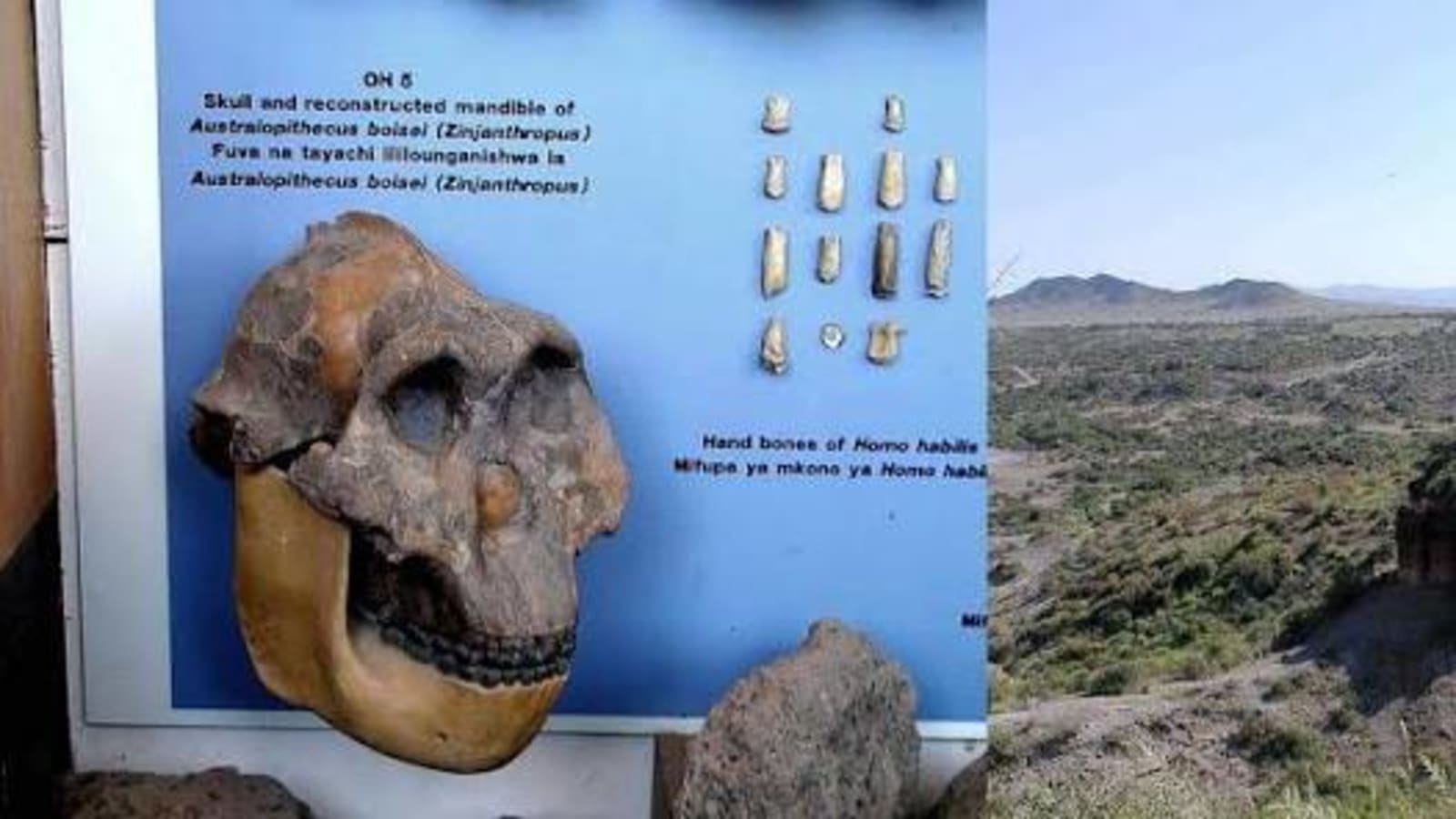
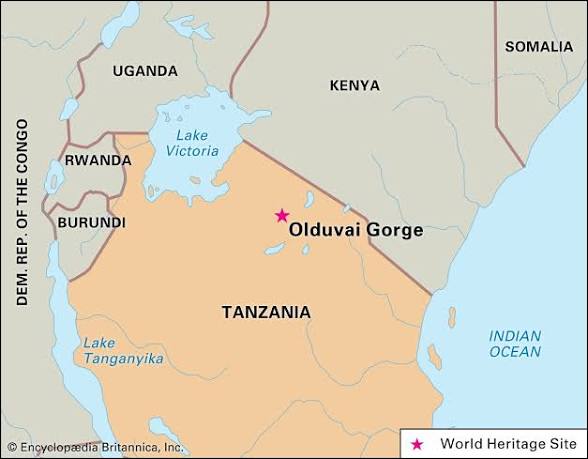
Nestled within the Ngorongoro Conservation Area of northern Tanzania, Olduvai Gorge is one of the most significant archaeological sites on Earth. Stretching for about 48 kilometers (30 miles), this steep-sided ravine preserves millions of years of geological and human history. Its layers of exposed rock have revealed evidence of some of the earliest ancestors of modern humans, earning it the enduring title of the "Cradle of Humankind."
The name "Olduvai" originated from an early European rendering of the Maasai word Oldupai, the name of a wild sisal plant that grows abundantly in the area. Although both spellings are used today, "Olduvai Gorge" remains the internationally recognized name, while "Oldupai" reflects the site's indigenous heritage.
The gorge came to global prominence through the pioneering work of Louis and Mary Leakey, whose archaeological excavations began in the 1930s. Their discoveries revolutionized the study of human origins. In 1959, Mary Leakey uncovered the fossilized skull of Paranthropus boisei, an early human relative estimated to be about 1.75 million years old. Later excavations revealed fossils belonging to Homo habilis, one of the earliest known members of the human genus, alongside stone tools that demonstrated the remarkable ingenuity of our ancient ancestors.
These discoveries reshaped scientific understanding by providing compelling evidence that East Africa played a central role in the story of human evolution. The gorge's rock layers, some dating back nearly two million years, preserve a chronological record of changing environments, volcanic activity, and the gradual development of early human societies. Each fossil and artifact recovered from the site has helped scientists piece together humanity's ancient journey.
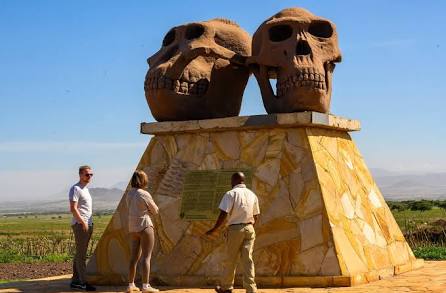
Olduvai Gorge is more than an archaeological treasure. It is part of the larger Ngorongoro Conservation Area, a UNESCO World Heritage Site celebrated for its exceptional combination of cultural heritage, wildlife, and natural beauty. Visitors can explore the Olduvai Gorge Museum, where fossils, stone tools, and educational exhibits provide insight into the groundbreaking discoveries made at the site. Standing at the edge of the gorge offers a humbling reminder that the story of every human being can be traced back to landscapes such as these.
Today, Olduvai Gorge remains an active center for scientific research. Archaeologists and paleoanthropologists from around the world continue to study its sediments, fossils, and artifacts, uncovering new evidence that deepens our understanding of the distant past. At the same time, conservation efforts seek to preserve this irreplaceable heritage for future generations.
Olduvai Gorge is not simply a place where fossils were found; it is a place where humanity discovered part of its own identity. Its ancient soil holds the footprints of beginnings, reminding us that before nations, empires, and civilizations, there were courageous ancestors learning to survive, create, and adapt in the heart of Africa.
Before history found its voice, the earth had already written its testimony in the stones of Olduvai. Every fossil is a whisper from forgotten generations, every layer of rock a page from humanity's first chapter. Here, Africa does not merely preserve the past it reminds the world where its story began.
© 2026 Ikeun Divine Michael | TalkAfricang.com


Comments (0)
Leave a Comment