How a 19-Year-Old Ugandan Queen Became the world's Latest Fascination

How a 19-Year-Old Ugandan Queen Became the world's Latest Fascination

There are beautiful women everywhere.

You'll find them hurrying to lectures in Kampala, bargaining in markets in Lagos, sharing laughter on the streets of Nairobi, or heading home after a long day in Accra. most will never wear a crown or trend online. They simply live their lives, unaware that they carry the kind of beauty that can stop people in their tracks.
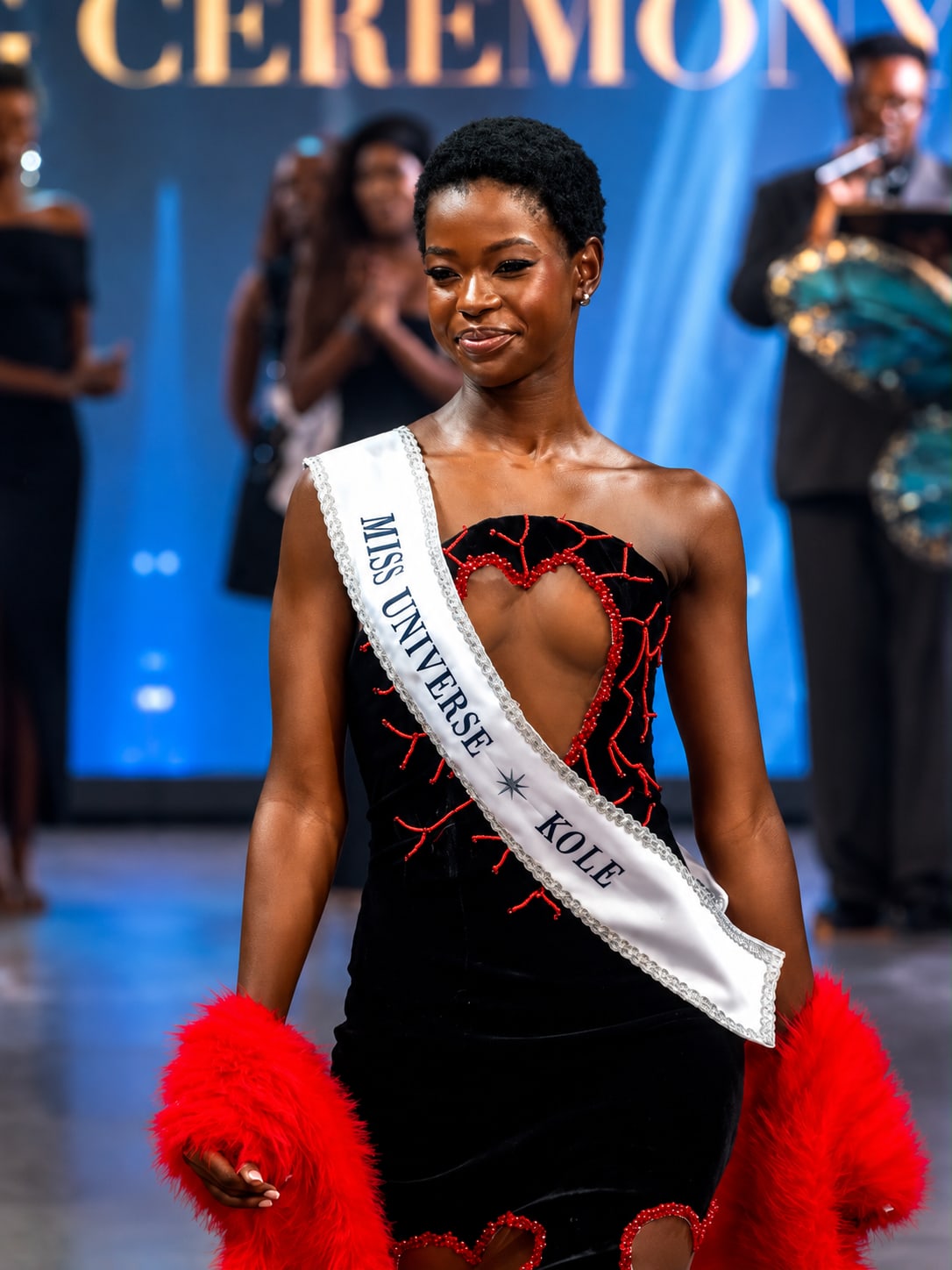
Yet every now and then, one face captures the world's attention.

That is exactly what happened when photos of Kimberly Jael Aremo Acio, a 19-year-old finalist in the inaugural Miss Universe Uganda 2026 competition, began circulating online. Drawn to her striking features, rich complexion and closely cropped natural hair, social media users across Africa and beyond quickly turned her into one of the pageant's most talked-about contestants.

For many Africans,the fascination felt familiar. Not because Kimberly isn't beautiful ,she undoubtedly is, but because her beauty can be traced back to our deep African roots.
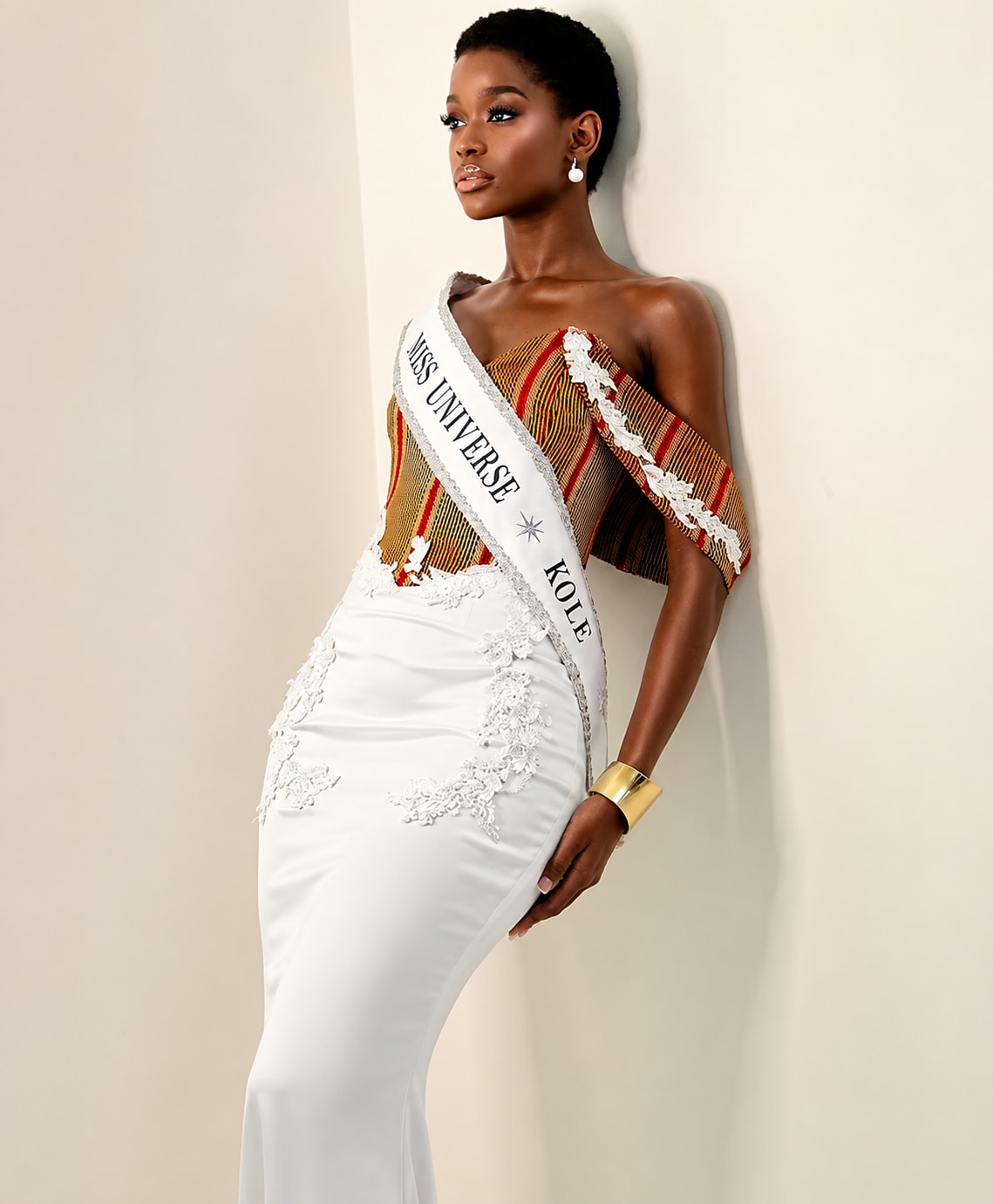
But Kimberly's story goes beyond a viral photograph.

Representing Kole District in Northern Uganda's Lango Region, she was a valedictorian before pageantry and hopes to study Biomedical Engineering. She says she was drawn to Miss Universe Uganda not for the glamour, but for its advocacy platform.

Her cause is intentional mentorship for young people, especially girls, inspired by her own experience with severe bullying between the ages of 10 and 13. Today, she hopes to encourage young people to discover their purpose regardless of their circumstances.

As the countdown to the Miss Universe Uganda 2026 Grand Finale continues, Kimberly has become more than a beauty queen to many observers. She represents a growing appreciation for African beauty in its most authentic form, while using her platform to speak about resilience, confidence and opportunity.

Sometimes, the most powerful stories do not arrive through headlines or grand speeches.

Sometimes, they arrive through a single photograph.

And for a few days, that photograph belonged to Kimberly Jael Aremo Acio.

OlajideToluwalopeMichelle|TalkAfricaNG

Share this article

Keep Reading

More stories you might find interesting

Stella Okoli’s $23 Million Plant to Boost Nigeria’s Pharmaceutical Self-Sufficiency
news

Stella Okoli’s $23 Million Plant to Boost Nigeria’s Pharmaceutical Self-Sufficiency

Emzor Pharmaceutical Industries’ $23 million Active Pharmaceutical Ingredient (API) plant in Sagamu, Ogun State, marks a significant step toward reducing Nigeria’s dependence on imported pharmaceutical ingredients. Initially focused on antimalarial medicines, the facility is expected to expand into APIs for HIV/AIDS treatment and other essential medicines, potentially strengthening local drug production, improving supply-chain resilience, creating specialised manufacturing capacity, and advancing Nigeria’s goal of pharmaceutical self-sufficienc

Africa Wins: 164 Countries Vote at the UN to Correct the Map, Togo's Robert Dussey Leads the Charge.
politics

Africa Wins: 164 Countries Vote at the UN to Correct the Map, Togo's Robert Dussey Leads the Charge.

On Friday, the United Nations General Assembly did something it has never done in its eighty-one-year history: it voted, formally and by an overwhelming margin, to correct the way the world has been drawn since 1569. Resolution A/80/L.104, titled "Correct the map: rebalancing global cartographic representation," was sponsored by Togo on behalf of the African Union's 55 member states and co-sponsored by the Bahamas. It passed 164 votes to 1, with six abstentions. Only the United States voted against it.

THE TRILLION-DOLLAR RECKONING: MARK ZUCKERBERG, META, AND THE BILL AFRICA NEVER GOT TO SEND
news

THE TRILLION-DOLLAR RECKONING: MARK ZUCKERBERG, META, AND THE BILL AFRICA NEVER GOT TO SEND

Meta faces a $1.4 trillion trial over allegations Facebook/Instagram were designed to addict children, following Cambridge Analytica, Myanmar, and Haugen's disclosures. While Australia, Britain, France, and Brazil have restricted youth access, no African government has acted despite Nigeria and Kenya leading global social media usage and Kenyan moderators suffering severe harm for minimal pay.

Comments (0)

Leave a Comment

0/1000
Loading comments...