
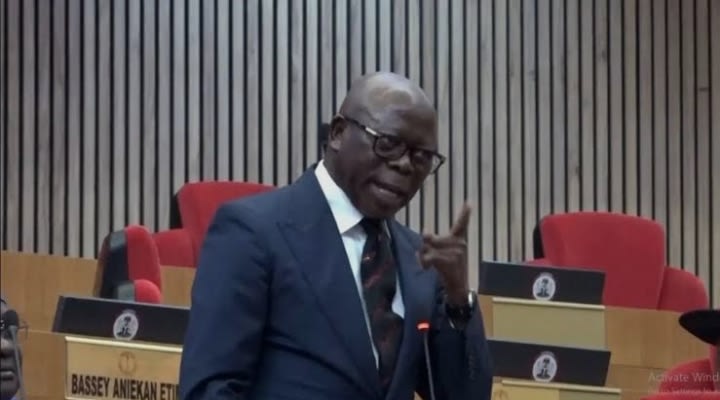
Adams Oshiomhole, a senior Nigerian lawmaker has called on President Bola Tinubu’s administration to consider reviewing the operating licences of South African-owned companies including MTN and DStv, amid rising anger over the treatment of Nigerians in South Africa.
Senator Adams Oshiomhole made the remarks during a heated discussion on xenophobic attacks and reported hostility faced by Nigerians living in South Africa, arguing that Nigeria must take stronger diplomatic and economic measures when its citizens are threatened abroad.
The former Edo State governor said Nigeria should not remain passive while its citizens are allegedly subjected to repeated violence, intimidation and discrimination. He urged the federal government to reassess bilateral relations and explore tougher responses, including actions that could affect major South African business interests in Nigeria.
“I don’t want this Senate to be shedding tears,” Oshiomhole said. “If you hit me, I’ll hit you. It is an economic struggle.” He argued that if Nigerians are being targeted abroad, Nigeria should be prepared to strike back by withdrawing the operational licences of major South African firms benefiting from the Nigerian market.
His comments have quickly sparked debate across the country, with some Nigerians backing the call as a bold stand for national dignity, while others warn that targeting large employers such as MTN and DStv could have unintended economic consequences for millions of customers and workers.
MTN Nigeria is one of the country’s largest telecommunications providers, serving tens of millions of subscribers, while DStv remains a dominant force in pay television. Any move against either company would likely carry significant financial and social implications.
The senator’s statement comes against the backdrop of long-standing tensions between Africa’s two biggest economies, where outbreaks of xenophobic violence in South Africa have repeatedly strained diplomatic ties. Past incidents have triggered protests in Nigeria, with many citizens demanding stronger retaliation against perceived injustices.
Nigeria’s government has yet to announce any official policy shift regarding the companies, and it remains unclear whether Oshiomhole’s proposal will translate into concrete action.
For now, the comments have reignited a broader conversation about how African governments should balance economic partnerships with the protection of their citizens abroad and whether corporate pressure should ever become a tool of foreign policy.
© 2026 Aliu Azeema
| TalkAfricang.com


Comments (0)
Leave a Comment