
Introduction
Imagine drinking large amounts of water every day, yet still feeling extremely thirsty. Imagine waking up several times each night just to urinate. For people living with diabetes insipidus, this can be a daily reality.
Despite its name, diabetes insipidus is not related to diabetes mellitus, the condition that affects blood sugar. Diabetes insipidus is a rare disorder of fluid balance. It happens when the body cannot properly control water levels, causing excessive urination and intense thirst.
If it is not recognized early, diabetes insipidus can lead to dehydration, disturbed electrolyte levels, and a reduced quality of life. The good news is that with proper diagnosis and treatment, most people can manage the condition well.
What Is Diabetes Insipidus?
Diabetes insipidus (DI) is a condition in which the body passes too much dilute urine and loses more water than normal. As a result, the person becomes very thirsty and may need to drink water frequently to replace lost fluids.
This problem usually involves antidiuretic hormone (ADH), also called vasopressin, or the way the kidneys respond to it.
ADH helps the kidneys conserve water. When there is too little ADH, or when the kidneys do not respond to it properly, the body cannot hold on to enough water. This leads to polyuria (passing large amounts of urine) and polydipsia (excessive thirst).
Diabetes Insipidus vs Diabetes Mellitus
Although the names sound similar, these two conditions are very different.
1. Main problem
- Diabetes Insipidus (DI): A disorder of water balance caused by problems with ADH or the kidneys' response to ADH.
- Diabetes Mellitus (DM): A disorder of blood sugar regulation caused by problems with insulin production or action.
2. Cause
- DI: May result from ADH deficiency, poor kidney response to ADH, abnormal thirst regulation, or pregnancy-related changes.
- DM: Results from insufficient insulin production, insulin resistance, or both.
3. Blood glucose
- DI: Usually normal because it does not primarily affect blood glucose.
- DM: Usually elevated (high) because glucose is not properly regulated.
4. Urine
- DI: Produces large amounts of very dilute urine, usually without glucose.
- DM: May produce glucose-containing urine, especially when blood glucose is sufficiently high, and increased urination occurs because glucose draws water into the urine.
5. Main symptoms
- DI: Mainly excessive thirst (polydipsia) and excessive urination (polyuria).
- DM: May cause excessive thirst, frequent urination, increased hunger, fatigue, and other symptoms of high blood glucose.
In short, diabetes insipidus is about water, while diabetes mellitus is about sugar.
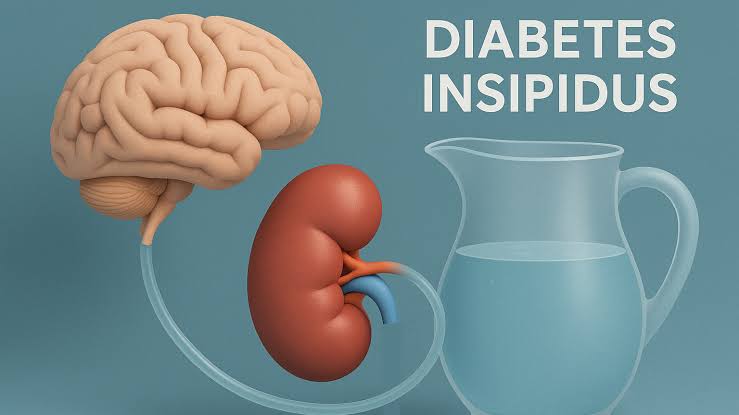
Types of Diabetes Insipidus
There are four main types of diabetes insipidus. Understanding the type is important because treatment depends on the cause.
1. Central Diabetes Insipidus
This happens when the body does not make enough ADH. ADH is produced in the hypothalamus and stored in the pituitary gland. If either of these areas is damaged, the body may not release enough hormone to help the kidneys conserve water.
Common causes of central DI
✓ Head injury
✓ Brain surgery
✓ Tumors involving the pituitary gland or
hypothalamus
✓ Infections
✓ Inflammation
✓Autoimmune disease
✓ Genetic causes
2. Nephrogenic Diabetes Insipidus
This type occurs when the kidneys do not respond properly to ADH, even though the hormone is present.
In other words, the body is making ADH, but the kidneys are not “listening” to it.
Common causes of nephrogenic DI
✓ Chronic kidney disease
✓ Certain medications, especially lithium
✓High calcium levels
✓Low potassium levels
✓Inherited kidney disorders
✓Urinary tract problems in some cases
3. Gestational Diabetes Insipidus
This is a rare form that happens during pregnancy.
During pregnancy, the placenta may produce an enzyme(vasopressinase, also known as cystine aminopeptidase) that breaks down ADH too quickly. When this happens, the mother may develop symptoms of DI.
Note: Gestational DI usually improves after delivery, but it still needs medical attention during pregnancy.
4. Dipsogenic Diabetes Insipidus
This type is linked to an abnormal thirst mechanism.
The problem starts when a person feels thirsty too often or drinks unusually large amounts of fluid. This can suppress normal ADH activity and lead to passing large amounts of urine.
Possible causes of dipsogenic DI
✓ Damage to the hypothalamus
✓ Certain mental health conditions
✓Disorders that affect thirst regulation
Causes of Diabetes Insipidus
Diabetes insipidus develops when the body cannot maintain normal water balance. The cause depends on the type, but in general, it may involve:
- Too little ADH production
- Poor kidney response to ADH
- Excessive breakdown of ADH during pregnancy
- Abnormal control of thirst
Because the causes differ, proper diagnosis is necessary before treatment begins.
Risk Factors
Anyone can develop diabetes insipidus, but some factors increase the risk.
You may be at higher risk if you have:
- A history of head injury
- Brain surgery, especially near the pituitary gland or hypothalamus
- A family history of inherited diabetes insipidus
- Kidney disease
- Long-term use of medications such as lithium
- High blood calcium or low blood potassium
- Pregnancy
- Brain infections such as meningitis or encephalitis
- Tumors affecting the brain’s hormone centers
Signs and Symptoms of Diabetes Insipidus
The main symptoms of diabetes insipidus are caused by water loss.
Common symptoms include:
1. Polyuria
This means passing unusually large amounts of urine. The urine is usually pale and dilute.
2. Polydipsia
This means excessive thirst. People may feel the need to drink water constantly.
3. Nocturia
This means waking up several times during the night to urinate.
4. Preference for cold water
Some people strongly crave cold water because of persistent thirst.
5. Dehydration
If lost fluids are not replaced, dehydration may develop.
Signs of dehydration can include:
✓ Dry mouth
✓ Dry skin
✓ Dizziness
✓Weakness
✓Tiredness
✓Weight loss
6. Symptoms in children
Children may show:
✓Bedwetting
✓Irritability
✓Poor feeding
✓Fever
✓Slow growth
✓Weight loss
7. Severe symptoms
In more serious cases, a person may develop:
✓Low blood pressure
✓Fast heart rate
✓Confusion
✓Extreme weakness
How Is Diabetes Insipidus Diagnosed?
Diabetes insipidus is diagnosed based on the person's symptoms, medical history, and physical examination. Doctors may use:
- Urine tests to check if the urine is unusually dilute.
- Blood tests to check sodium, electrolytes, and kidney function.
- Water deprivation test to see how the body responds when fluid intake is temporarily restricted under medical supervision.
- MRI scans may be used to examine the brain, especially the hypothalamus and pituitary gland.
Treatment of Diabetes Insipidus
Treatment depends on the type and cause of diabetes insipidus.
• Central DI: Usually treated with desmopressin, which acts like ADH.
• Nephrogenic DI: Treatment focuses on the underlying cause and may include medication changes, dietary adjustments, and medicines that help reduce urine production.
• Gestational DI: Often treated with desmopressin and careful monitoring during pregnancy.
• Dipsogenic DI: Treatment focuses on managing the underlying cause and monitoring fluid intake.
Staying adequately hydrated is important because excessive water loss can lead to dehydration and other complications.
Complications of Diabetes Insipidus
If diabetes insipidus is not treated properly, it can lead to serious problems.
Possible complications include:
1. Dehydration
This is the most common and most important complication. The body may lose more water than it can replace.
2. Hypernatremia
This means a high sodium level in the blood. It can happen when the body loses too much water.
Symptoms may include:
✓ Irritability
✓ Weakness
✓ Confusion
✓ Muscle twitching
✓ Seizures in severe cases
3. Sleep disturbance
Frequent nighttime urination can lead to poor sleep, daytime tiredness, and reduced concentration.
4. Growth problems in children
In children, untreated or severe DI may affect normal growth and development.
Severe dehydration can become life-threatening if not treated quickly.
Can Diabetes Insipidus Be Prevented?
Not all cases of diabetes insipidus can be prevented, especially when the cause is genetic or related to unavoidable disease.
However, some steps may reduce risk or help with early detection:
- Seek medical care after serious head injury
- Follow up properly after brain surgery
- Use medications such as lithium only under medical supervision
- Treat kidney disease and electrolyte problems promptly
- Pay attention to unusual thirst and frequent urination
- Early diagnosis can prevent complications, even when the condition itself cannot be fully prevented.
When to See a Doctor
You should speak with a healthcare professional if you notice:
- Constant or unusual thirst
- Passing very large amounts of urine
- Frequent urination during the day and night
- Dehydration symptoms such as dry mouth, dizziness, or weakness
- Bedwetting or poor growth in a child
Seek urgent medical attention if there is:
- Confusion
- Severe weakness
- Fainting
- Signs of severe dehydration
- Seizures
⚠️ Medical Disclaimer
This article is for educational and awareness purposes only. It is not a substitute for professional medical advice, diagnosis, or treatment. If you experience persistent excessive thirst, frequent urination, or signs of dehydration, consult a qualified healthcare professional. Do not start, stop, or change any medication without medical advice.
Conclusion
Diabetes insipidus is a rare but important disorder that affects the body’s ability to regulate water. It is not related to blood sugar, even though its name sounds similar to diabetes mellitus.
The condition can cause excessive urination, intense thirst, sleep disruption, and dangerous dehydration if left untreated. Because there are different types of diabetes insipidus, proper diagnosis is essential. Once the type is identified, treatment can be tailored to the cause.
With early care, good fluid management, and the right treatment plan, many people with diabetes insipidus can live healthy and normal lives.
© 2026 Ukachi Rejoice| TalkAfricang.com



Comments (0)
Leave a Comment