SWALLOWED WHOLE: INSIDE AFRICA'S RED PILL AND FEMOSPHERE EPIDEMIC

SWALLOWED WHOLE: INSIDE AFRICA'S RED PILL AND FEMOSPHERE EPIDEMIC

How online gender warfare is reshaping love, marriage and trust for Africa's Gen Z and the data shows it is already working
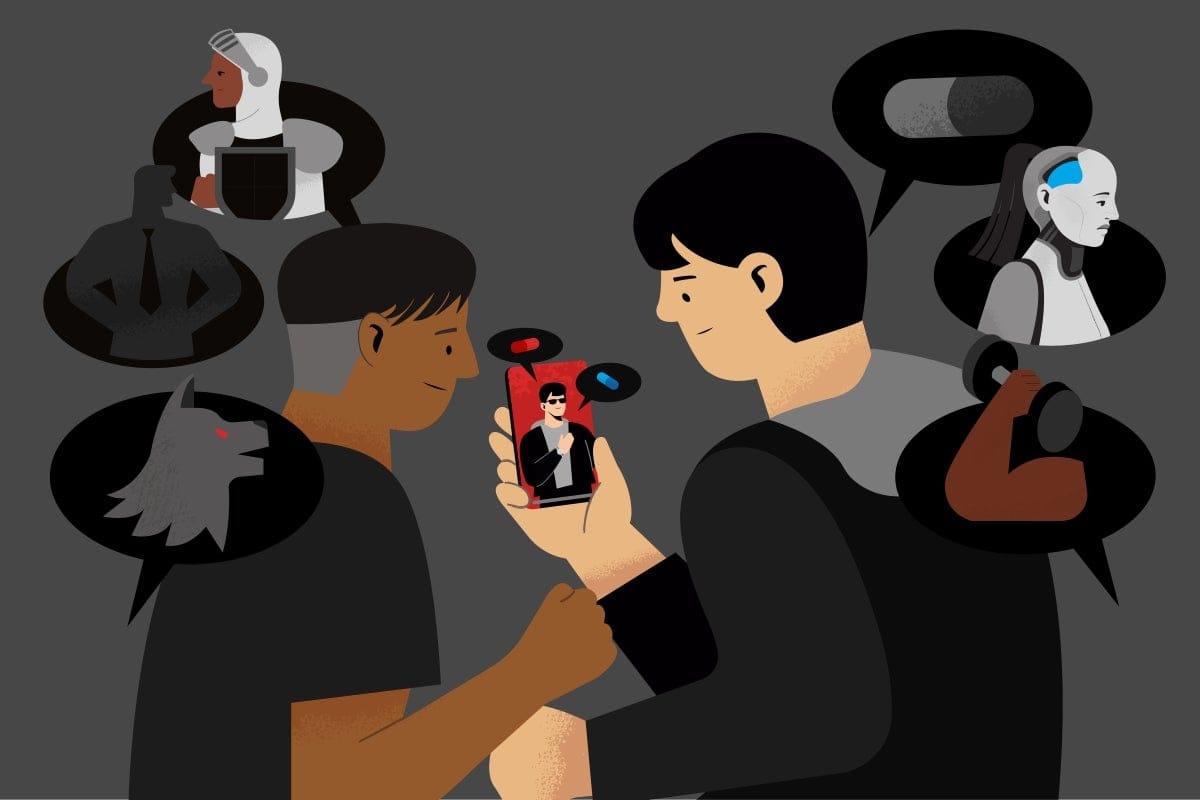
Red pill or blue pill: the manosphere's central metaphor now has archetypes on both sides — knights, lone wolves and "optimised" masculinity for men; a mirrored femosphere for women. Illustration: UN Women.

Nearly one in three Gen Z men worldwide now believe a wife should always obey her husband. Almost one in four believe a woman should not appear too independent. These are not fringe opinions scraped from an incel forum they are the findings of a 2026 global survey of 23,000 adults across 29 countries, conducted by Ipsos and King's College London's Global Institute for Women's Leadership. Gen Z men are, on this measure, twice as regressive as their grandfathers' generation.

This is the generation that grew up on smartphones, TikTok and Instagram Reels the same generation Africa is now betting its economic future on. And across the continent, in Lagos WhatsApp groups, Nairobi TikTok comment sections and Accra Twitter Spaces, a version of the same war is already raging. It has names: the manosphere, the red pill, the femosphere. It has a body count. And Nigeria's numbers should alarm anyone who cares about where this generation is headed.

What the Red Pill Actually Is

Photograph: billnoll/Getty Images.

The term borrows its imagery from The Matrix swallowing the red pill supposedly "wakes" a person up to a hidden truth the world is hiding from them. In the manosphere, that "truth" is the claim that feminism, not patriarchy, is the dominant force oppressing men; that women hold covert power over dating, marriage and society; and that men must "optimise" themselves physically, financially, psychologically to reclaim dominance.

Its mirror image, the femosphere, has grown just as fast: content urging young women to abandon romantic idealism, treat dating as transactional leverage, and guard themselves against men framed as inherently unreliable. Where the manosphere sells dominance, the femosphere sells suspicion. Both monetise the same raw material heartbreak, loneliness and distrust and both are now deeply embedded in how young Africans talk about love.

Andrew Tate at a tribunal in Bucharest this year — the femosphere mirrors his belief that strategies are needed to conquer the opposite gender. Photograph: Vadim Ghirdă/AP

The Numbers Nobody Wants to Publish

31% of Gen Z men globally believe a wife should always obey her husband — more than double the Baby Boomer rate of 13%.

The King's College/Ipsos data does not stop there. Thirty-three percent of Gen Z men say a husband should have the final say in major decisions. Fifty-nine percent believe men are now expected to do too much to support gender equality. And crucially: 59% of Gen Z overall men and women say there is open tension between the sexes in their country, a wider gap than any other generation reports. The manosphere did not invent this anxiety, but researchers studying its content say it is actively feeding it, packaging economic insecurity and loneliness as a war against women.

This matters for Africa because the continent has the youngest population on Earth and among the fastest-growing rates of smartphone and social media adoption anywhere. A generation forming its first ideas about love, marriage and gender equality is doing so inside algorithmic feeds built in Silicon Valley and increasingly, in studios in Lagos, Nairobi and Accra imitating the same content formats.

Africa's Own Gender Gulf

Continental data confirms the divide is not imported it is homegrown too. A 2026 GeoPoll survey across Kenya, Nigeria, South Africa and Egypt found that while 65% of respondents believe men and women have equal opportunities at the societal level, that figure collapses to 52% when people are asked about their own workplace and further still when broken down by gender: 57% of employed men say their workplace treats everyone equally, against just 46% of women who say the same.

Afrobarometer's most recent Nigeria data tells a starker story about official accountability: only 26% of Nigerians believe government is doing a fair or good job promoting equal rights for women, while 54% say government should be doing more. Popular support for full gender equality remains limited, particularly among men even as most Nigerians say women deserve equal chances at elected office.

In Kenya, researchers tracking manosphere keywords across X, Facebook, Instagram, TikTok and YouTube between January 2020 and March 2024 documented a significant spike in usage, particularly after the Covid-19 pandemic. One Nairobi-based gender-violence organisation, Usikimye, has directly linked a client's husband's months-long consumption of "masculinity influencer" content to an escalation into physical violence a pattern its founder describes as increasingly common, not rare.

Nigeria, By the Numbers and It Is Ugly

Silence remains one of the biggest barriers to addressing gender-based violence in Nigeria — over half of victims never disclose to anyone. Illustration: The Guardian.

Nigeria recorded 135 femicide incidents resulting in 149 deaths in 2024 alone, according to the DOHS Femicide Dashboard and corroborated by Amnesty International.

The 2023–2024 Nigeria Demographic and Health Survey found that 23% of women aged 15–49 have experienced physical or sexual intimate partner violence from a current or former partner, and 21% have faced physical or sexual violence since age 15. Twelve-month rates stand at 9% for physical violence and 3% for sexual violence meaning this is not historical trauma; it is ongoing, present-tense harm. Malala Fund Nigeria's chief executive noted at the 2025 "16 Days of Activism" campaign that Nigeria alone accounts for 10% of the world's gender-based violence survivors. Nigeria's national conviction rate for GBV cases, meanwhile, remains below 5%.

None of this proves that red pill or femosphere content causes intimate partner violence on its own. But the researchers who study the manosphere as a radicalisation pipeline are consistent on one point: exposure reinforces existing hierarchical and controlling attitudes toward women, particularly among men who already feel economically or socially precarious and Nigeria's Gen Z, facing a youth unemployment crisis and a currency that has lost most of its value in three years, is precarious by almost any definition.

The Algorithm Doesn't Care About Your Culture
1002749398

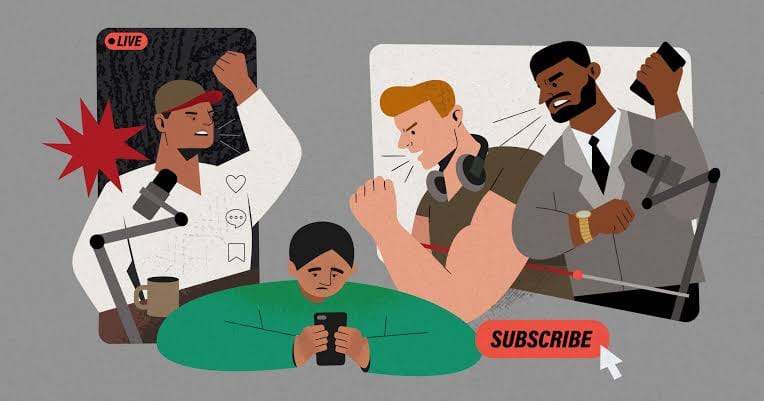
Teenagers rarely search for hateful content directly — they arrive at it through fitness, dating or motivational videos before algorithms escalate the feed. Illustration: UN Women.

What makes this especially dangerous in the Nigerian and African context is how the content arrives. Teenagers and young adults rarely search for "how to hate women" or "how to distrust men." Researchers who study the pipeline internationally note that most users encounter this material while searching for something adjacent and harmless fitness routines, skincare tips, dating advice, motivational content before algorithms escalate them toward increasingly hostile material. The same mechanism operates identically whether the platform is serving a teenager in Ohio or one in Ogun State.

Layered onto Nigerian and African social media, this algorithmic pipeline meets a cultural terrain already primed for it: unresolved tension between "traditional" gender expectations submission, bride price, provider-husband roles and a generation of young women increasingly vocal about financial independence, "soft life" aspirations and refusing labour they were never compensated for. Nigerian relationship commentary, dating coaches and "high-value man/woman" content some of it directly descended from the late Kevin Samuels' YouTube playbook now recycles manosphere logic in pidgin and local cultural references, making it feel indigenous rather than imported.

What This Means for a Generation

The consequence is not abstract. It shows up in relationships that end because one partner has been "red-pilled" by podcasts and YouTube channels; in young women adopting femosphere cynicism as self-protection rather than genuine preference; in a rising generation of men who report feeling blamed for inequality they did not create, alongside a rising generation of women who report feeling unsafe in relationships their mothers would have called normal. Global researchers describe this as an "aggrieved entitlement" cycle where declining relative status among men translates into hostility rather than solidarity.

Africa's demographic dividend the very thing economists point to as the continent's greatest long-term asset is also its greatest exposure. A youth population this large, this online and this economically anxious is precisely the audience the manosphere's business model is built to capture and monetise. Nigeria's data on femicide, intimate partner violence and stalled gender-equality attitudes suggests the capture is already well underway. The question is no longer whether this content is reaching African Gen Z. It already has. The question is what if anything is being built to counter it.

© 2026 Abdulmumin Ishola Olaleye | TalkAfricang.com

Filed under: lifestyle

Share this article

Comments (0)

Leave a Comment

0/1000
Loading comments...

SWALLOWED WHOLE: INSIDE AFRICA'S RED PILL AND FEMOSPHERE EPIDEMIC

SWALLOWED WHOLE: INSIDE AFRICA'S RED PILL AND FEMOSPHERE EPIDEMIC

How online gender warfare is reshaping love, marriage and trust for Africa's Gen Z and the data shows it is already working

Red pill or blue pill: the manosphere's central metaphor now has archetypes on both sides — knights, lone wolves and "optimised" masculinity for men; a mirrored femosphere for women. Illustration: UN Women.

Nearly one in three Gen Z men worldwide now believe a wife should always obey her husband. Almost one in four believe a woman should not appear too independent. These are not fringe opinions scraped from an incel forum they are the findings of a 2026 global survey of 23,000 adults across 29 countries, conducted by Ipsos and King's College London's Global Institute for Women's Leadership. Gen Z men are, on this measure, twice as regressive as their grandfathers' generation.

This is the generation that grew up on smartphones, TikTok and Instagram Reels the same generation Africa is now betting its economic future on. And across the continent, in Lagos WhatsApp groups, Nairobi TikTok comment sections and Accra Twitter Spaces, a version of the same war is already raging. It has names: the manosphere, the red pill, the femosphere. It has a body count. And Nigeria's numbers should alarm anyone who cares about where this generation is headed.

What the Red Pill Actually Is

Photograph: billnoll/Getty Images.

The term borrows its imagery from The Matrix swallowing the red pill supposedly "wakes" a person up to a hidden truth the world is hiding from them. In the manosphere, that "truth" is the claim that feminism, not patriarchy, is the dominant force oppressing men; that women hold covert power over dating, marriage and society; and that men must "optimise" themselves physically, financially, psychologically to reclaim dominance.

Its mirror image, the femosphere, has grown just as fast: content urging young women to abandon romantic idealism, treat dating as transactional leverage, and guard themselves against men framed as inherently unreliable. Where the manosphere sells dominance, the femosphere sells suspicion. Both monetise the same raw material heartbreak, loneliness and distrust and both are now deeply embedded in how young Africans talk about love.

Andrew Tate at a tribunal in Bucharest this year — the femosphere mirrors his belief that strategies are needed to conquer the opposite gender. Photograph: Vadim Ghirdă/AP

The Numbers Nobody Wants to Publish

31% of Gen Z men globally believe a wife should always obey her husband — more than double the Baby Boomer rate of 13%.

The King's College/Ipsos data does not stop there. Thirty-three percent of Gen Z men say a husband should have the final say in major decisions. Fifty-nine percent believe men are now expected to do too much to support gender equality. And crucially: 59% of Gen Z overall men and women say there is open tension between the sexes in their country, a wider gap than any other generation reports. The manosphere did not invent this anxiety, but researchers studying its content say it is actively feeding it, packaging economic insecurity and loneliness as a war against women.

This matters for Africa because the continent has the youngest population on Earth and among the fastest-growing rates of smartphone and social media adoption anywhere. A generation forming its first ideas about love, marriage and gender equality is doing so inside algorithmic feeds built in Silicon Valley and increasingly, in studios in Lagos, Nairobi and Accra imitating the same content formats.

Africa's Own Gender Gulf

Continental data confirms the divide is not imported it is homegrown too. A 2026 GeoPoll survey across Kenya, Nigeria, South Africa and Egypt found that while 65% of respondents believe men and women have equal opportunities at the societal level, that figure collapses to 52% when people are asked about their own workplace and further still when broken down by gender: 57% of employed men say their workplace treats everyone equally, against just 46% of women who say the same.

Afrobarometer's most recent Nigeria data tells a starker story about official accountability: only 26% of Nigerians believe government is doing a fair or good job promoting equal rights for women, while 54% say government should be doing more. Popular support for full gender equality remains limited, particularly among men even as most Nigerians say women deserve equal chances at elected office.

In Kenya, researchers tracking manosphere keywords across X, Facebook, Instagram, TikTok and YouTube between January 2020 and March 2024 documented a significant spike in usage, particularly after the Covid-19 pandemic. One Nairobi-based gender-violence organisation, Usikimye, has directly linked a client's husband's months-long consumption of "masculinity influencer" content to an escalation into physical violence a pattern its founder describes as increasingly common, not rare.

Nigeria, By the Numbers and It Is Ugly

Silence remains one of the biggest barriers to addressing gender-based violence in Nigeria — over half of victims never disclose to anyone. Illustration: The Guardian.

Nigeria recorded 135 femicide incidents resulting in 149 deaths in 2024 alone, according to the DOHS Femicide Dashboard and corroborated by Amnesty International.

The 2023–2024 Nigeria Demographic and Health Survey found that 23% of women aged 15–49 have experienced physical or sexual intimate partner violence from a current or former partner, and 21% have faced physical or sexual violence since age 15. Twelve-month rates stand at 9% for physical violence and 3% for sexual violence meaning this is not historical trauma; it is ongoing, present-tense harm. Malala Fund Nigeria's chief executive noted at the 2025 "16 Days of Activism" campaign that Nigeria alone accounts for 10% of the world's gender-based violence survivors. Nigeria's national conviction rate for GBV cases, meanwhile, remains below 5%.

None of this proves that red pill or femosphere content causes intimate partner violence on its own. But the researchers who study the manosphere as a radicalisation pipeline are consistent on one point: exposure reinforces existing hierarchical and controlling attitudes toward women, particularly among men who already feel economically or socially precarious and Nigeria's Gen Z, facing a youth unemployment crisis and a currency that has lost most of its value in three years, is precarious by almost any definition.

The Algorithm Doesn't Care About Your Culture

1002749398

Teenagers rarely search for hateful content directly — they arrive at it through fitness, dating or motivational videos before algorithms escalate the feed. Illustration: UN Women.

What makes this especially dangerous in the Nigerian and African context is how the content arrives. Teenagers and young adults rarely search for "how to hate women" or "how to distrust men." Researchers who study the pipeline internationally note that most users encounter this material while searching for something adjacent and harmless fitness routines, skincare tips, dating advice, motivational content before algorithms escalate them toward increasingly hostile material. The same mechanism operates identically whether the platform is serving a teenager in Ohio or one in Ogun State.

Layered onto Nigerian and African social media, this algorithmic pipeline meets a cultural terrain already primed for it: unresolved tension between "traditional" gender expectations submission, bride price, provider-husband roles and a generation of young women increasingly vocal about financial independence, "soft life" aspirations and refusing labour they were never compensated for. Nigerian relationship commentary, dating coaches and "high-value man/woman" content some of it directly descended from the late Kevin Samuels' YouTube playbook now recycles manosphere logic in pidgin and local cultural references, making it feel indigenous rather than imported.

What This Means for a Generation

The consequence is not abstract. It shows up in relationships that end because one partner has been "red-pilled" by podcasts and YouTube channels; in young women adopting femosphere cynicism as self-protection rather than genuine preference; in a rising generation of men who report feeling blamed for inequality they did not create, alongside a rising generation of women who report feeling unsafe in relationships their mothers would have called normal. Global researchers describe this as an "aggrieved entitlement" cycle where declining relative status among men translates into hostility rather than solidarity.

Africa's demographic dividend the very thing economists point to as the continent's greatest long-term asset is also its greatest exposure. A youth population this large, this online and this economically anxious is precisely the audience the manosphere's business model is built to capture and monetise. Nigeria's data on femicide, intimate partner violence and stalled gender-equality attitudes suggests the capture is already well underway. The question is no longer whether this content is reaching African Gen Z. It already has. The question is what if anything is being built to counter it.

© 2026 Abdulmumin Ishola Olaleye | TalkAfricang.com

Filed under: lifestyle

Share this article

Comments (0)

Leave a Comment

0/1000
Loading comments...