
Penile fracture is a rare but serious medical emergency involving the male reproductive system. You may wonder, "Is there a bone in the penis that can break?" The answer is no. During an erection, the penis fills with blood and becomes firm. If it is suddenly bent or struck with force, the tunica albuginea, a tough tissue surrounding the erectile tissue, can tear. This injury is known as a penile fracture and requires prompt medical attention.
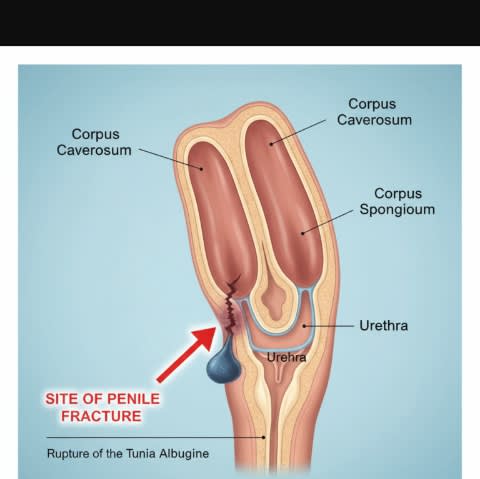
Penile Fracture
A penile fracture is a urological condition characterized by a tear or rupture of the tunica albuginea, the tough fibrous covering around the erectile tissue of the penis, usually when an erect penis is suddenly bent or struck with force.
The penis contains tubelike erectile tissues: two that run the length of the top of your penis (corpora cavernosa) and one that runs along the bottom of your penis (corpus spongiosum), which also surrounds the urethra. A strong, fibrous connective tissue layer (tunica albuginea) covers these tissues. A penile fracture occurs when the tunica albuginea tears open.
How common is penile fracture?
Some reports say it may occur in 1 in 10,000 to 1 in 100,000 people who have a penis. However, it may be more common but rarely reported because many who experience a penile fracture don’t recognize that it’s a medical emergency and avoid seeking treatment.
- It is also underreported because of fear and embarrassment.
- It is most common in men aged 20-50 years who are sexually active
Causes of Penile fracture
- Sexual intercourse, especially when the penis slips out and forcefully bends against the partner's body.
- Forceful masturbation involving bending or manipulation of an erect penis.
- Accidental trauma to an erect penis.
- Rolling over or falling onto an erect penis, although this is less common.
- Forceful bending or manipulation of the erect penis, including practices such as taqaandan, can cause the tunica albuginea to tear.
Taqaandan: This is a traditional method of bending your erect penis in order to change its shape or to discourage masturbation by making an erection go away. Taqaandan is more common in the Middle East or Central Asia.
- Blunt trauma
Signs and Symptoms
They may include:
- A sudden popping or cracking sound.
- Immediate penile pain
- Loss of erection (detumescence)
- Penile swelling and bruising
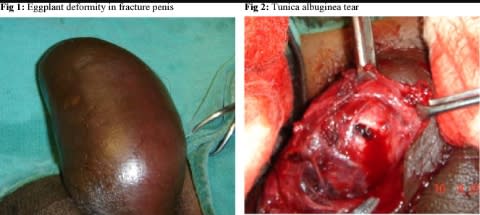
- Abnormal bending of deformity of penis(eggplant deformity)
- Hematoma
- Ecchymosis
- Hematuria (blood in urine)
- Difficulty urinating
Diagnosis and treatment
Penile fracture can be diagnosed just by physical examination but other test may be done to confirm diagnosis and to ascertain the extent of trauma to surrounding tissues.
These test may include
- Ultrasound
- MRI (Magnetic Resonance Imaging)
- Retrograde Urethrogram (RUG).
- Cystoscopy
Treatment of Penile Fracture
A penile fracture is a urological emergency that usually requires prompt surgical treatment. A urologist repairs the tear in the tunica albuginea with stitches (sutures). If the urethra or other tissues are also injured, they will be repaired during the same procedure.
Early treatment improves the chances of recovering normal erectile and urinary function and reduces the risk of complications.
Can Penile Fracture Heal Without Surgery?
A true penile fracture generally requires surgery. Without treatment, it may lead to complications such as erectile dysfunction, abnormal curvature of the penis, chronic pain, painful erection, infections, shortening of penis, edema, fibrosis, or problems with urination.
However, if the injury is not a true fracture, the healthcare provider may recommend non-surgical treatment, such as pain medication, ice packs, or urinary catheterization when necessary.
With prompt surgical repair:
- Success rate >90%
- Excellent cosmetic outcome
- Excellent functional outcome
- Most men resume sexual activity within 6–8 weeks, depending on healing and surgeon advice.
Prevention
To reduce the risk of penile injury:
- Avoid forceful or overly vigorous sexual activity.
- Use adequate lubrication when appropriate
- Avoid intentional bending or forceful manipulation of an erect penis.
- Stop immediately if severe pain or a sudden injury occurs.
- Seek emergency medical care if a penile fracture is suspected.
Let's Talk About It
- Have you heard of penile fracture before?
- What would you do if someone close to you experienced this injury?
- What questions do you have about penile fracture?
Feel free to ask your questions.
Conclusion
Penile fracture is a serious medical emergency that requires prompt medical attention. Despite being a sensitive topic, it is important to create awareness and encourage open conversations about it. Due to embarrassment, fear, or personal beliefs, some people may delay seeking medical care or turn to traditional remedies, believing the condition has a spiritual cause. This can increase the risk of serious complications.
Awareness and sensitization are key. Anyone who experiences a suspected penile fracture should set embarrassment aside and seek immediate medical attention. Early diagnosis and appropriate treatment can greatly improve recovery and help prevent long-term complications. If you or someone you know such as a friend, neighbor, or family member experiences a suspected penile fracture, encourage them to seek medical attention immediately. Now that you know better, help spread the message and remind others that seeking prompt medical care is the safest choice. Early diagnosis and appropriate treatment can greatly improve recovery and help prevent long-term complications.
© 2026 Ukachi Rejoice| TalkAfricang.com
















Comments (0)
Leave a Comment